Moving to Geneva: Swiss side or French side?
You have signed, or are about to sign, a contract in Geneva, and you are hesitating between living in Switzerland and living just across the border in France. Short answer: your permit decides what you are allowed to do, your budget and your timeline decide the rest, and for most employees arriving from abroad, the French side is possible from day one as long as you know three rules. This guide is written for expats landing with a Swiss contract, and above all for those who need to be settled within thirty days.
In short
- The real question is not "Switzerland or France?" but "which permit, which budget, which timeline?".
- An EU or EFTA employee can live on the French side from arrival; a national of any other country must first have lived six months in the border zone (OCPM, 2026).
- The Geneva rental file is the real obstacle of the first weeks: Swiss payslips, a guarantor, a deposit of up to three months. On the French side some options skip all of that, coliving among them, one category among several.
What really decides: permit, budget, timeline
This is not a matter of taste, it is a matter of rules. Three parameters settle everything else: your permit (it sets where you are allowed to live), your net budget after tax at source (it sets what you can pay without putting yourself at risk), and your timeline (it sets what is realistic before your first day at work).
The permit first. If you live in Switzerland with a Swiss contract, you receive a residence permit, usually a B permit. If you live in France and work in Geneva, you are a cross-border worker and receive a G permit, requested from the cantonal population and migration office (OCPM). The difference is who is entitled to which one right away.
The budget next. In Geneva, tax is withheld at source from your salary in both cases. What changes is housing: according to the listings surveyed in 2026, a studio in Geneva rents for 1,200 to 2,500 CHF a month excluding charges, with a vacancy rate below 1% (OCSTAT). On the French side, the same budget gets you a room in a house or a whole flat, with a French lease, a French file and a daily commute.
The timeline last. Finding a flat in Geneva often takes four to eight weeks without a Swiss rental history or Swiss payslips. On the French side, a classic flatshare takes two to six weeks. With us, the median time between application and move-in is thirty days (2026 data), and 72 h from your first contact is enough when a room is available.
Four profiles, four degrees of freedom
EU or EFTA employee. You can live on the French side from arrival. The G permit is requested on the basis of your employment contract; the one lasting constraint is to return to your French home at least once a week (OCPM, "Applying for a cross-border work permit" page, updated July 2025). So you can sign a lease in France before your first day at work, then start the application.
National of a country outside the EU/EFTA. This is the profile for which neighbouring France is not automatic. For a G permit, the OCPM requires that you have had "for at least six months, your regular domicile in the neighbouring border zone", a durable right of residence in the neighbouring country, and that you "return at least one day a week to your home abroad"; the employer files the application, must prove an unsuccessful search on the Swiss and European labour markets, and the announced processing time is twelve weeks (OCPM, "Salaried work for non-EU/EFTA cross-border workers" page, updated 16 February 2026). In plain terms: if you arrive from outside Europe with a B permit, you start in Switzerland, and the French side becomes an option after six months of regular residence in the border zone, with a durable French residence title. Check your situation with your employer and the OCPM before signing anything.
Staff of international organisations. With a legitimation card from the Swiss foreign ministry (DFAE), you are in a category of your own. Many international civil servants live in neighbouring France, and the Geneva Welcome Centre (CAGI) lists housing in Geneva, in the canton of Vaud and in neighbouring France on its housing platform. The residence formalities in France go through your organisation's protocol service: ask before committing to a lease.
Couple or family. The spouse's permit follows its own logic depending on nationality and activity, and a family needs a whole home, schools and often a car. The question becomes: which side offers the family home within your budget, with a commute both of you can live with? For a couple without children arriving with a single contract, a transitional solution on the French side for three to six months is common, the time to look for the long-term home without pressure.
Switzerland or France: the table that settles it
| Criterion | Living in Geneva | Living on the French side |
|---|---|---|
| Rent for a studio | 1,200 to 2,500 CHF excluding charges | 1,300 to 1,400 € including charges for 27 to 30 m² furnished in Annemasse (listings, September 2026) |
| Rental file | Three Swiss payslips, debt-collection register extract, often a guarantor or a bank guarantee | Payslips or employment contract, often a guarantor based in France for a classic rental |
| Deposit | Up to three months' rent, on a blocked account in your name (art. 257e of the Swiss Code of Obligations) | One to two months' rent depending on the lease; two months excluding charges for furnished rentals |
| Realistic timeline | Four to eight weeks without a Swiss history | Two to six weeks in a classic flatshare, one to two weeks in coliving |
| Tax on your salary | Withheld at source, then a Geneva tax return | Withheld at source in Geneva; worldwide income declared in France, without double taxation; quasi-resident status possible if 90% of your income is taxable in Switzerland (Geneva tax administration, DRIS/TOU form before 31 March) |
| Health insurance | Compulsory LAMal | Right of option within three months of starting work: LAMal or French health insurance; irrevocable choice, LAMal by default (ameli.fr, April 2026) |
| Commute | Tram, bus or bike within the city | From Annemasse, Geneva Eaux-Vives in 7 minutes by Léman Express and Cornavin in 23 minutes; count 20 minutes door to door to Geneva Eaux-Vives by Léman Express from Ville-la-Grand, Ambilly or Annemasse |
| Unemployment if you lose your job | Swiss unemployment insurance | Paid by France Travail on the basis of your Swiss salary, with the U1 document (Unédic, 2026) |
Quick read: EU citizen, single, short timeline, the right-hand column works from the first week; arriving from outside Europe or as a family, the left-hand column is your starting point.
No Swiss payslips, no guarantor: what works, what does not
It is the number one objection of newcomers, and it is well founded. In Geneva, a letting agency most often asks for three payslips, a debt-collection extract and a rent guarantee; without a Swiss history, your file ranks behind a resident's. On the French side, a classic agency asks for payslips and, very often, a guarantor based in France, which an expat does not have.
What works: No Swiss payslip yet? Some landlords on the French side assess your contract rather than your history: at La Villa Coliving the file comes down to three items (a signed employment contract or job offer, an ID, and a deposit of two months' rent excluding bills) and a guarantor is only asked for case by case, when the contract does not cover the rent — we tell you before we reply, never after the visit.
What does not work: a studio in the city within the first four weeks, unless you have a personal connection or company housing. Many of our residents started on the French side, built up three Swiss payslips, then moved, or stayed.
The housing options, category by category
| Option | Price | Realistic timeline | Paperwork required | Minimum stay |
|---|---|---|---|---|
| Studio in the city (Geneva) | 1,200 to 2,500 CHF excluding charges | 4 to 8 weeks | 3 Swiss payslips, debt-collection extract, guarantor or bank guarantee, deposit of up to 3 months | 12 months in practice |
| Classic flatshare, French side | 700 to 1,000 € depending on the town (listings, September 2026) | 2 to 6 weeks | Payslips, often a guarantor in France, 1 to 2 months' deposit | one-year lease, one month's notice when furnished |
| Coliving, French side (e.g. La Villa Coliving) | from CHF 1,370/€1,470 all-inclusive, CHF 1,430/€1,530 with a private shower room | 72 h from first contact if a room is available | Employment contract or job offer, ID, deposit of 2 months excluding charges; a guarantor is only asked for case by case, when the contract does not cover the rent — we tell you before we reply, never after the visit | none: 12-month lease, one month's notice |
| Furnished studio or aparthotel, French side | 1,300 to 1,600 € including charges (listings, September 2026) | 1 day to 2 weeks | Credit card or light file | 1 night to 1 month |
| Aparthotel in Geneva | 700 to 1,700 CHF a week depending on the residence and the season (rates displayed, September 2026) | 1 day | Credit card | 1 night |
Where to look for a room on the French side when you work in Geneva
Coliving operators on the French side
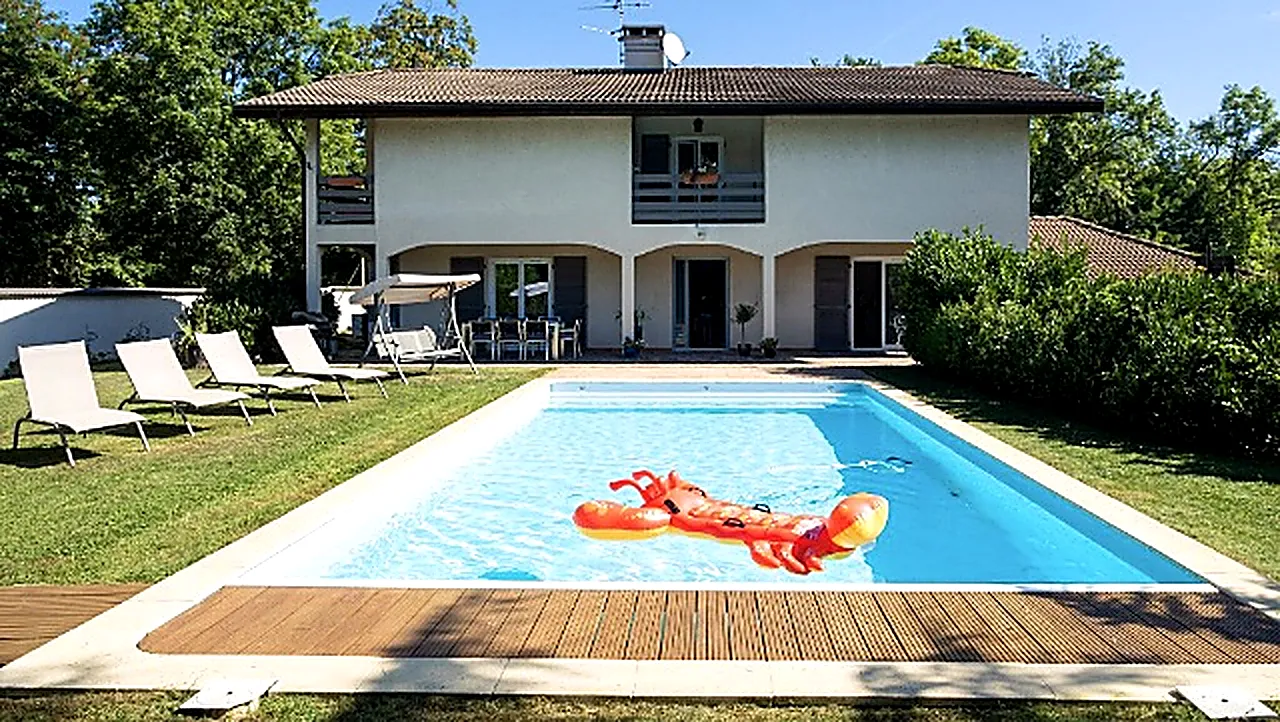
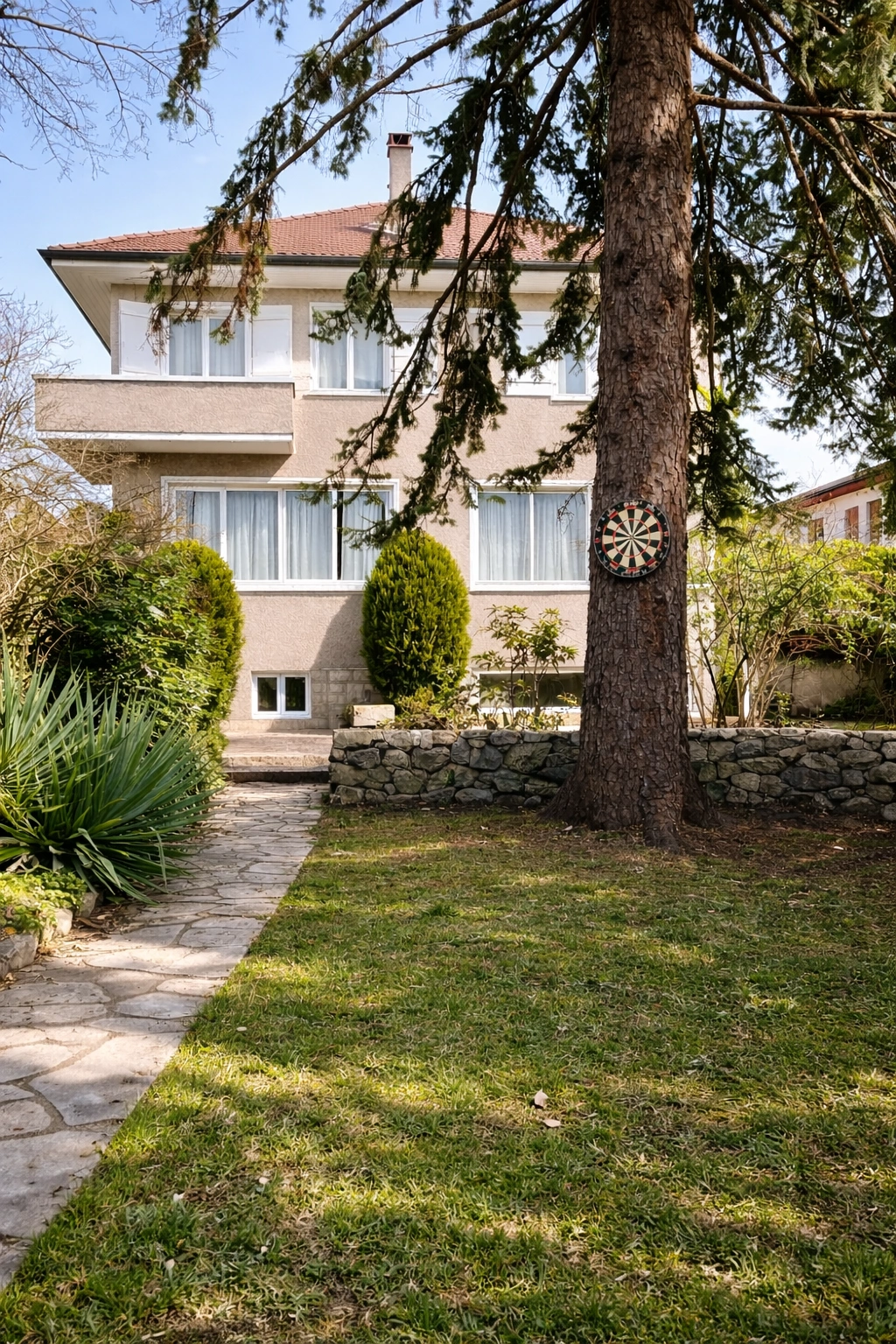
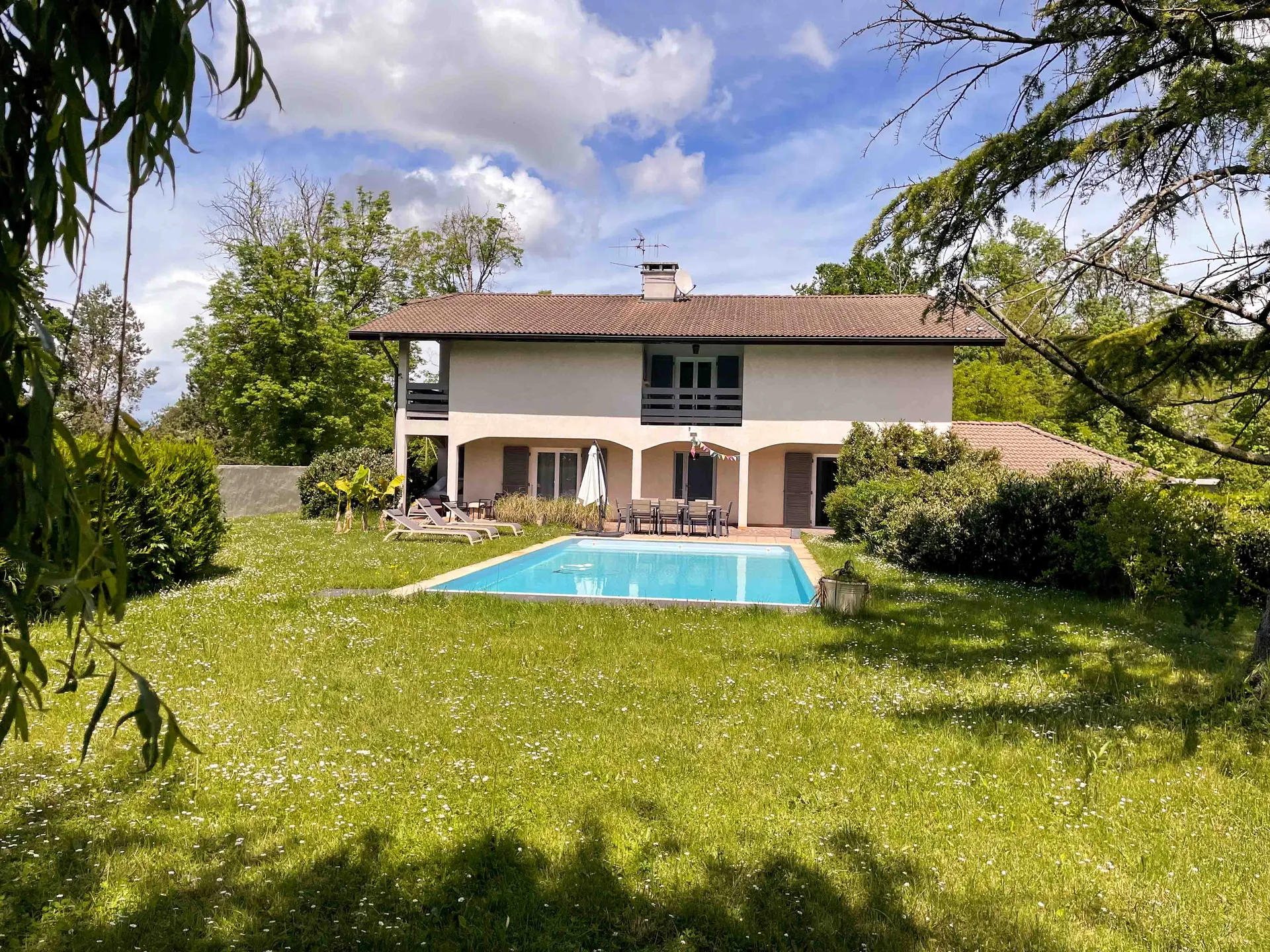
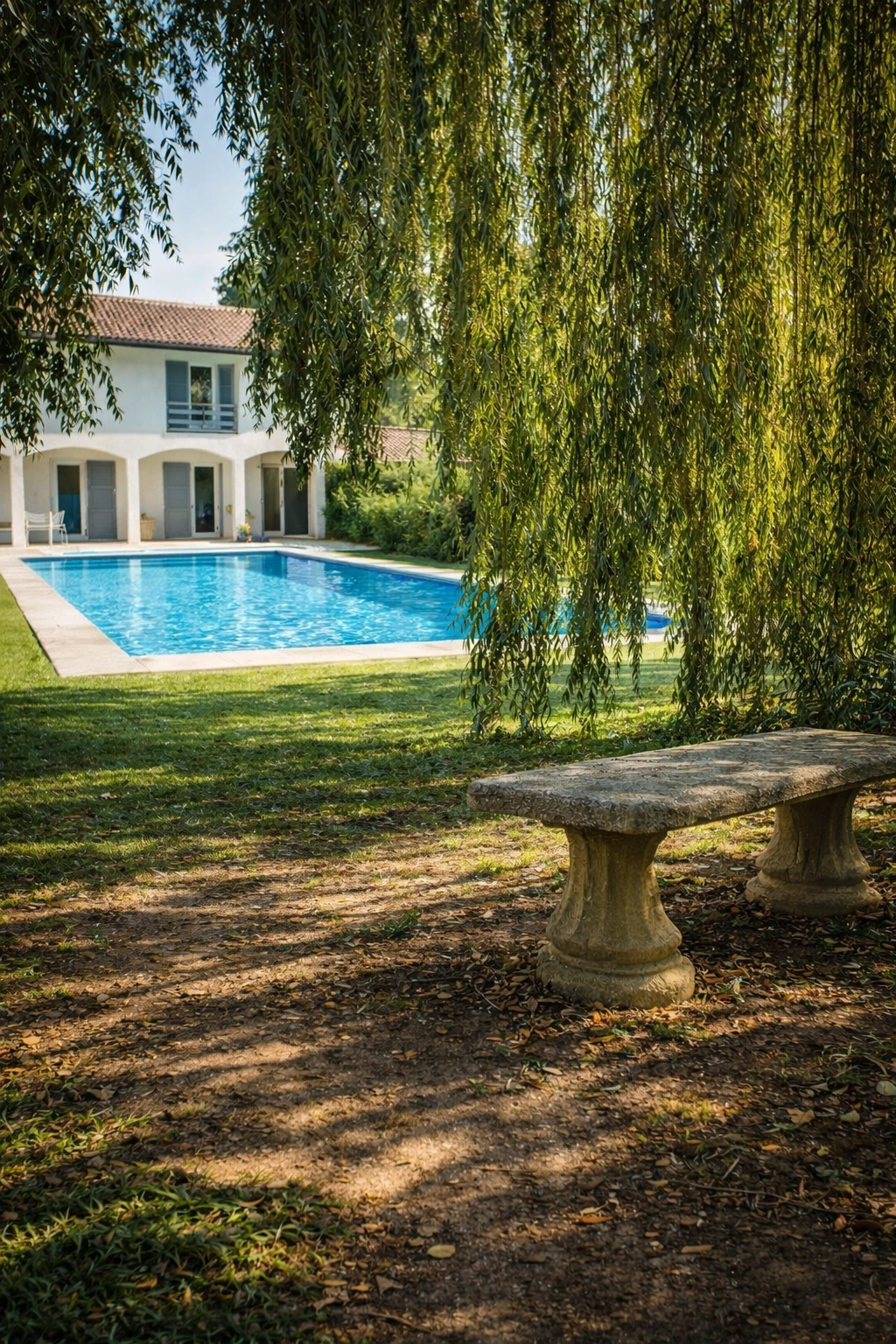
La Villa Coliving: 3 houses (La Villa in Ville-la-Grand, Le Loft in Ambilly, Le Lodge in Annemasse), 29 furnished rooms of 16 to 24 m², pool, sauna and gym, all inclusive from CHF 1,370 to 1,430 a month. No application fee, your employment contract is the file. Apply in 2 minutes, answer within 48 hours.
Peer-to-peer flatshare platforms
La Carte des Colocs, Leboncoin, Roomlala (service fees may apply to the tenant depending on the listing): rooms from €700 to €1,000 depending on the town, bills often on top.
Facebook groups
The public group "Coliving & Colocation à Genève et alentours !" (about 1,600 members, around a hundred listings a month) and cross-border commuter groups. The former is run and moderated by the La Villa Coliving team: published rules, suspicious listings removed.
The CAGI housing exchange
For employees of international organisations: the housing exchange of the Geneva Welcome Centre (CAGI) lists offers in Geneva, in the canton of Vaud and in neighbouring France.
For a new job in a month, the coliving mechanics are simple: a two-minute application, a reply within 48 h, a visit on site or by video, a lease signed online, move-in 72 h after your first contact if a room is available, and the free rooms are visible live. If you are aiming for a classic flatshare or a studio instead, the guide to finding a flatshare in Geneva covers the portals, the groups and the traps.
The first 30 days, week by week
Week 1, before you even arrive. You pick your side with the table above. If it is the French side, you send two or three applications and ask for a video visit. You gather the universal documents: passport, employment contract, your employer's attestation for the permit.
Week 2, arrival. You sign your lease, you open a bank account (a Swiss bank for the salary, a French bank if you live in France), and your employer launches the B or G permit. If you live on the French side, note the date you started work: your health-insurance right of option runs from that date, for three months, and the choice is irrevocable (ameli.fr, April 2026). Ask for two quotes before the end of the second month.
Week 3, the paperwork that matters. Taxes: nothing to do right away, tax is withheld at source; you note the quasi-resident request for the following spring if 90% of your income is taxable in Switzerland. Léman Express or TPG pass, family doctor.
Week 4, the first review. Does the housing you chose keep its promises on commute and budget? If yes, you extend. If not, a lease like ours lets you leave with one month's notice without having lost the year.
When it is not the right choice
Neighbouring France is not for everyone, and saying so saves us pointless visits. If you are a national of a country outside the EU/EFTA and you arrive straight from abroad, start in Switzerland: the six-month rule is clear. If you are coming for an assignment of a few weeks, a serviced residence suits you better than a lease. If you arrive as a family with children, you need a whole home and a school, not a room in a shared house. If your job requires a car every day, the cross-border drive at rush hour looks nothing like the train times displayed. And if your housing budget is below 1,200 € a month all inclusive, a classic flatshare on the French side will be a better fit than a coliving. To compare the border towns with each other, read where to live on the French side when you work in Switzerland.
Frequently asked questions
Can I live in France with a B permit?
Not while keeping the B permit: living in France and working in Geneva is cross-border status, hence a G permit. For an EU or EFTA citizen, the switch is made on simple request with the employment contract. For a national of another country, the OCPM requires six months of regular domicile in the border zone and a durable right of residence in France (page updated 16 February 2026). When in doubt, ask your employer and the OCPM for written confirmation before signing a lease.
How long does it take to find housing?
In Geneva, count four to eight weeks without a Swiss rental history, sometimes more in sought-after neighbourhoods. On the French side, two to six weeks for a classic flatshare, and one to two weeks in coliving when a room is free. At La Villa, the median time between application and move-in is thirty days (2026 data), and 72 h from your first contact is enough when a room is available.
Is it possible without a Swiss guarantor?
Yes. A Geneva letting agency most often asks for a guarantor or a bank guarantee; on the French side several landlords assess your employment contract rather than a guarantor. With us, the file comes down to three items (a signed employment contract or job offer, an ID, a deposit of 2 months excluding charges) and a guarantor is only asked for case by case, when the contract does not cover the rent — we tell you before we reply, never after the visit.
Is the cost of living really lower on the French side?
For housing, yes, at equal size: that is what the listings surveyed by our Observatory in June 2026 show. For everything else, it depends on your lifestyle. Groceries and restaurants cost less in France, but French health insurance is calculated on your income, fuel and tolls add up if you drive, and your salary remains taxed at source in Geneva. The right method: compare the total monthly cost, housing, bills, transport and insurance included, not the advertised rent.
What if I lose my job?
A cross-border worker who loses their job is paid by their country of residence, so by France Travail, on the basis of their Swiss salary, with the U1 document issued by the Swiss unemployment insurance (France Travail and Unédic, 2026). Your G permit ends with the contract. On the housing side, a lease with one month's notice, like La Villa's, limits the risk: you are not committed for a year.