Coliving: The New Housing Trend for Young Professionals - Revolution or Fad?
Coliving: The New Housing Trend for Young Professionals - Revolution or Fad?
Just ten years ago, the idea of sharing your kitchen with strangers after age 25 was almost unthinkable. Today, coliving attracts thousands of young professionals across Europe, radically transforming our relationship with housing. Between the persistent real estate crisis and evolving mentalities, this new form of urban living generates as much enthusiasm as it does questions.
But does a true revolution in our lifestyles hide behind this trendy phenomenon? Let's decode a movement that's redefining the codes of modern living.
The Emergence of Coliving: When Necessity Meets Innovation
The Movement's Roots
Coliving didn't emerge from nowhere. Its origins draw from several converging phenomena that marked the 2010-2020 decade. First, the housing crisis hitting most European metropolises. With per-square-meter prices exploding in cities like Geneva, Zurich, or even Annemasse, accessing decent housing has become an obstacle course for many young professionals.
Simultaneously, the emergence of the sharing economy has accustomed an entire generation to sharing: cars, offices, tools... Why not housing? This profound cultural shift prepared the ground for accepting coliving as a viable alternative.
Finally, the evolution of the job market, with the rise of remote work and professional mobility, created new needs. Young professionals now seek more flexibility and fewer administrative constraints in their residential journey.
A Response to Contemporary Challenges
Modern coliving, as we conceive it at La Villa Coliving, addresses several major challenges:
Financial accessibility: By pooling certain costs (equipment, common areas, services), coliving provides access to superior comfort for a controlled budget. At 1380 CHF per month for a private room with all services included, our residents benefit from exceptional value compared to traditional solutions in the Geneva region.
Administrative simplification: Gone are endless paperwork, large deposits, and complex negotiations. Coliving offers a streamlined approach that particularly appeals to mobile profiles.
Fighting isolation: In cities where creating social connections becomes increasingly difficult, coliving offers a ready-made community. An aspect particularly appreciated after the pandemic-related isolation period.
Portrait of the Modern Coliver
Beyond Generational Clichés
Contrary to preconceptions, the typical coliver profile isn't limited to the thirty-something digital nomad. Our observations in Annemasse reveal surprising diversity:
Young mobile executives (25-35 years) certainly represent a large portion of our residents. Often early in their careers, they prioritize experience and human relationships over real estate assets. For them, investing in a traditional apartment makes no sense if they plan to change cities in the next 2-3 years.
Professionals in transition constitute a rapidly growing segment. Divorce, career change, return from expatriation... Coliving offers a comfortable temporary solution while reorganizing.
Entrepreneurs and freelancers find a stimulating ecosystem in coliving. The collective emulation and professional synergies that naturally emerge in these environments represent undeniable added value.
International profiles particularly appreciate the installation simplicity and multicultural community that facilitates integration into a new country.
Evolving Motivations
The survey we regularly conduct among our residents reveals an interesting evolution in motivations:
- 2019-2020: Economic dimension dominated (70% of responses)
- 2021-2022: Community aspect gained strength (45%)
- 2023-2024: Flexibility and services lead (55%)
This evolution demonstrates sector maturation and its users. Coliving is no longer perceived solely as an economic fallback, but as an assumed lifestyle choice.
Architectural Innovation and Experience Design
Reinventing Living Space
Coliving success largely depends on its ability to reinvent traditional housing distribution. At La Villa Coliving, every space has been designed to optimize both privacy and sharing.
Private spaces aren't just bedrooms. True 15-20m² cocoons, they integrate optimized work areas, intelligent storage solutions, and private bathrooms. The goal: each resident has a real home, not just an improved student room.
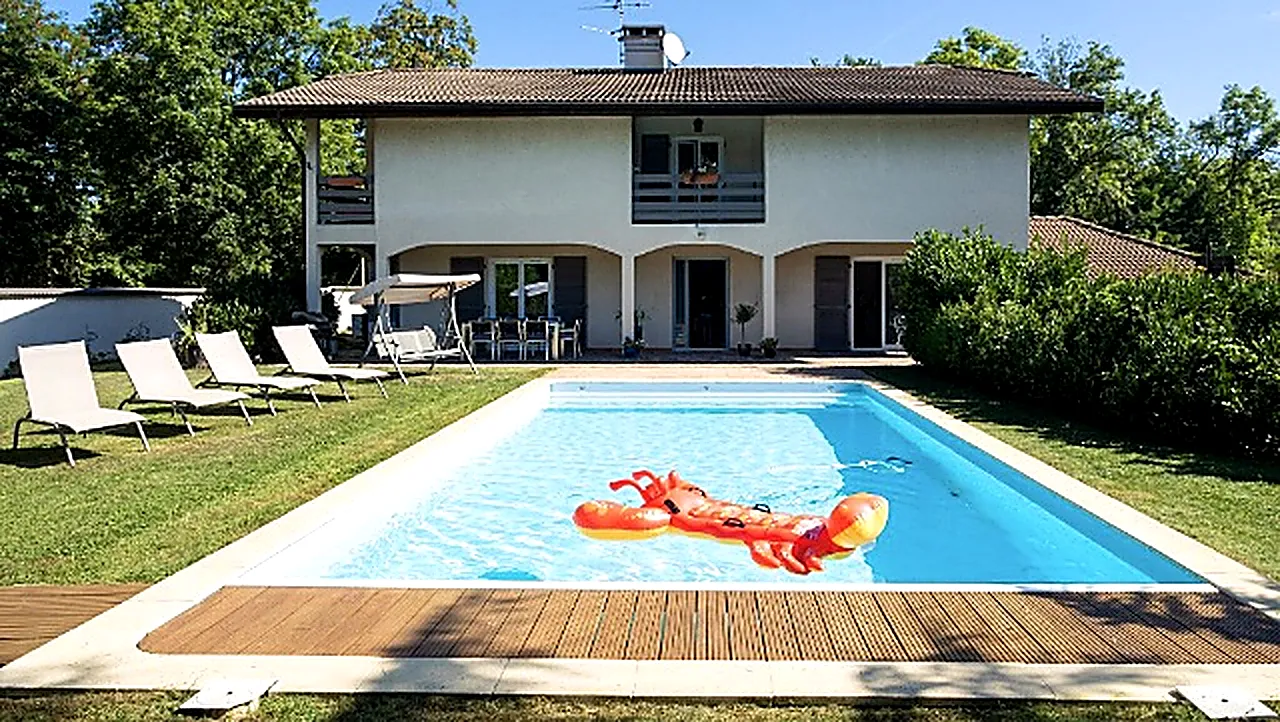
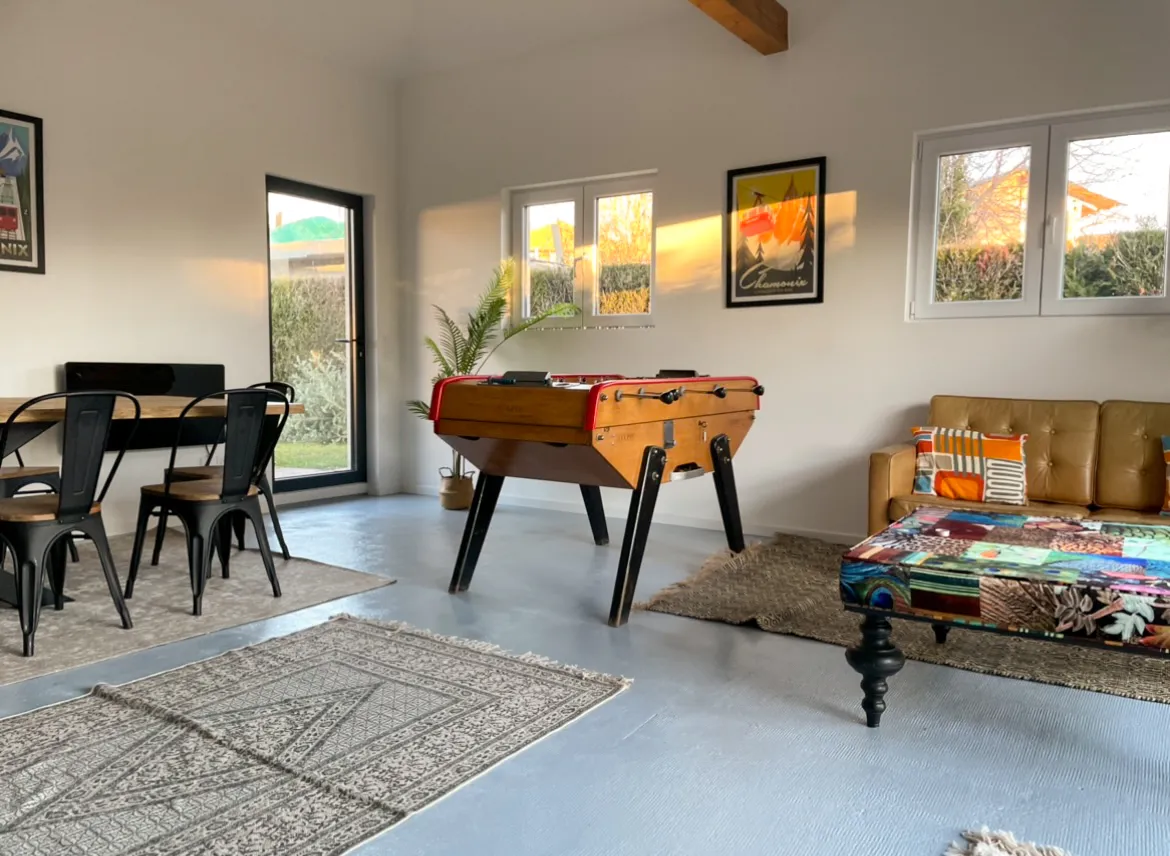
Shared spaces are the concept's true DNA. Chef-style equipped kitchen, modular living room, coworking space, terrace... Each common area encourages natural interactions while respecting everyone's privacy needs.
The delicate balance between private and collective life constitutes every coliving project's major challenge. Our approach favors gradation: from very intimate spaces (bedroom), to semi-private spaces (small lounges), to large common areas. This variety allows each personality to find their balance.
Technology Serving Community Living
Innovation isn't limited to physical spaces. Digital tools play an increasing role in the coliving experience:
- Community applications to organize activities, manage shared tasks, facilitate exchanges
- Smart home automation to optimize comfort and energy consumption
- Integrated digital services: concierge, maintenance, reservations...
This technological dimension, far from being a gimmick, meets hyperconnected generation expectations while streamlining daily management.
The Phenomenon's Economic and Social Impact
A Market in Full Structuring
The coliving market now represents several billion euros in Europe, with estimated annual growth of 20%. This rapid expansion attracts investors and developers, but also raises questions about sector professionalization.
In the Lake Geneva region, the emergence of quality projects like The Lodge in Annemasse contributes to local economic development. Our residents, mostly active in the Geneva metropolis, directly contribute to cross-border economy while benefiting from Haute-Savoie's exceptional living environment.
Impact on Traditional Real Estate
Far from cannibalizing the traditional market, coliving addresses specific uncovered needs. It even constitutes an innovation laboratory inspiring developers and architects to rethink collective housing.
Some concepts from coliving (shared spaces, integrated services, lease flexibility) are beginning to influence traditional real estate, demonstrating this new approach's growing influence.
Societal and Urban Planning Issues
Coliving questions our traditional urban models. By densifying housing occupation while improving quality of life, it offers an interesting response to metropolitanization challenges.
This more collective housing approach could also help reduce environmental footprint: equipment pooling, energy optimization, reduced surface needs per inhabitant.
Revolution or Fad: The Verdict
Signals of a Lasting Trend
Several indicators argue for the movement's permanence:
Offer diversification: Beyond "young professional" formats, concepts for seniors, single-parent families, or seasonal workers emerge. This diversification demonstrates model adaptation to society's varied needs.
Institutional integration: Local authorities and social landlords take keen interest in coliving as a housing policy tool. This institutional recognition far exceeds a passing fad.
Qualitative maturation: Recent projects, like The Lodge, prioritize architectural quality and sustainability over early low-cost solutions. This upscaling reflects sector professionalization.
Challenges to Overcome
To establish itself durably in the real estate landscape, coliving must overcome several pitfalls:
Excessive standardization: The risk of seeing uniform formats emerge, disconnected from local specificities.
Economic balance: Reconciling profitability, quality, and accessibility remains a permanent challenge.
Community support: Creating and maintaining collective dynamics requires specific skills, between real estate management and social animation.
Coliving's Future: Towards Normalization?
Evolution Scenarios
Three scenarios emerge for coming years:
Scenario 1: Mainstream integration - Coliving becomes a normal residential path option, like traditional rental or homeownership.
Scenario 2: Specialization - Development of specialized niches (senior coliving, families, specific professionals) with very targeted offers.
Scenario 3: Hybridization - Progressive fusion with traditional real estate, integrating services and shared spaces in renewed formats.
The La Villa Coliving Approach
Our vision follows sustainable quality logic rather than frantic growth. Through The Lodge in Annemasse, we develop a premium model prioritizing:
- Architectural excellence and comfort
- Authentic community animation
- Strong territorial anchoring
- Environmental and social sustainability
This artisanal approach allows us to maintain coliving's pioneering spirit while meeting market's growing demands.
Conclusion: Neither Revolution nor Fad, Natural Evolution
Coliving doesn't revolutionize housing in the strict sense. It's not a technological breakthrough comparable to automobile or internet emergence. However, it translates a profound evolution in our lifestyles and aspirations.
Like shopping centers' emergence in the 60s or coworking spaces in the 2000s, coliving addresses new needs with new tools. Its lasting success will depend on its ability to evolve and adapt to ongoing societal transformations.
What's certain is that coliving has already enriched our residential palette. It offers a credible alternative between individual ownership and traditional rental, particularly adapted to contemporary mobility, flexibility, and social connection challenges.
For today's young professionals, the question isn't whether coliving will last, but rather how it will continue evolving to meet their changing needs. And on this point, the adventure is just beginning.
Want to discover the premium coliving experience? The Lodge in Annemasse welcomes you in an exceptional setting, close to Geneva. 12-month leases, international community, premium services: discover your new way of living.