Remote Work for Cross-Border Workers: Rules & Limits 2026
The 500 CHF/month question
Remote work has exploded since 2020. For cross-border workers, it's both an opportunity and a regulatory minefield. Working from home on the French side when you're employed in Switzerland — what exactly changes? The short answer: potentially your taxation, social coverage, and transport budget. The long answer is this article.
The two 2026 thresholds: 40% (tax) and 49.9% (social security)
In 2026 there are two thresholds not to be confused — one for tax, one for social security.
Tax: 40%. As long as you telework less than 40% of your annual working time from France, your entire salary remains taxed at source in Switzerland. This comes from the amendment to the Franco-Swiss tax treaty, in force since 24 July 2025 and applicable from 1 January 2026. Good to know: up to 10 days per year of temporary assignments outside Switzerland can be included within that 40%.
Social security: 49.9%. You can telework up to 49.9% of your time while remaining affiliated with Swiss social security (AVS, LPP, unemployment and health insurance). This comes from the European framework agreement in force since 1 July 2023. The condition: holding a valid A1 certificate, which your employer requests via the Swiss ALPS platform.
Concretely, in a 5-day week, 2 days of remote work (40%) are compatible with keeping both your Swiss taxation AND your Swiss social coverage — it's also the rhythm we see most often among our residents who work remotely. These two thresholds do not date from 2026: the 49.9% social threshold has applied since the framework agreement of 1 July 2023 (which raised the former 25% rule), and the 40% tax threshold since the transitional agreements of 2022-2023. What 2026 changes is that the amendment to the treaty makes the 40% tax threshold permanent, after years of being provisional.
What's allowed without complications
Up to 2 days of remote work per week (40%). Occasional days at home for personal reasons (medical appointment, delivery, transport strike). Remote work during partial sick leave, if your doctor authorizes it.
What requires vigilance
Three or more days per week from France (60% and beyond). You then cross the 49.9% social-security threshold: you risk switching to French social security, which would change your contributions, LPP, and health coverage. You also exceed the 40% tax threshold: the salary tied to your teleworked days then becomes taxable in France, from the very first day. Above 40%, always validate the impact with your employer and a specialist.
The tax impact of remote work
Taxation is separate from social security, but the 2026 logic is now simple. As long as you stay under 40% annual remote work, nothing changes: your entire compensation remains taxed at source in Geneva, as if you were on site 100% of the time. That's the whole point of the amendment that took effect on 1 January 2026, which secured a practice that had become common since Covid.
Beyond 40%, the portion of your salary corresponding to teleworked days from France becomes taxable in France — and from the very first teleworked day, not only for the fraction above 40%. The Franco-Swiss tax treaty then applies its tax-credit mechanism to avoid double taxation. The impact stays manageable, but it requires careful filing.
Pragmatic advice — the same we give our remote-working residents: stay under 40% (tax) and under 49.9% (social) to enjoy remote work without any complications. Beyond that, consult a fiduciary specializing in cross-border taxation.
Working from home when you live in a flatshare or coliving
The practical question of remote work, beyond regulation, is: do you have a decent place to work? In a studio, the answer is yes — but with the drawbacks of total isolation for 8 hours. In traditional flatsharing, it's often problematic: noise, shared space, unstable WiFi, no dedicated desk.
The coliving advantage for remote work
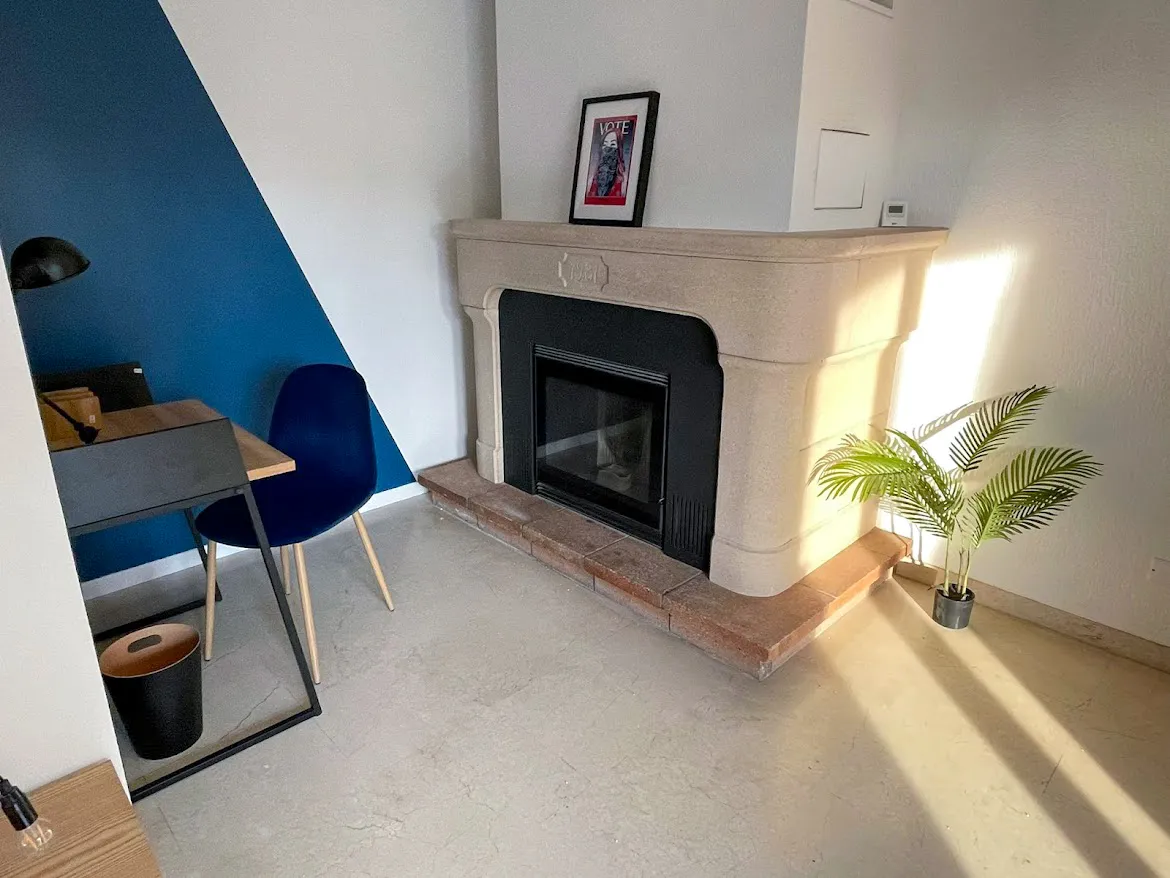
At La Villa Coliving, each room is equipped with a desk and work chair. Fiber optic internet is sized so 10 people can have simultaneous video calls without slowdown. Common areas offer alternatives: dining table for a change of scenery, garden in summer for informal calls, living room for collaborative work.
WiFi is a critical point for remote work. Our houses are equipped with fiber optic (1 Gbps download) with WiFi 6 access points in each room. No "sorry, WiFi's lagging, can you repeat?" during a Teams call with your manager in Geneva.
The coliving ecosystem as "mini-coworking"
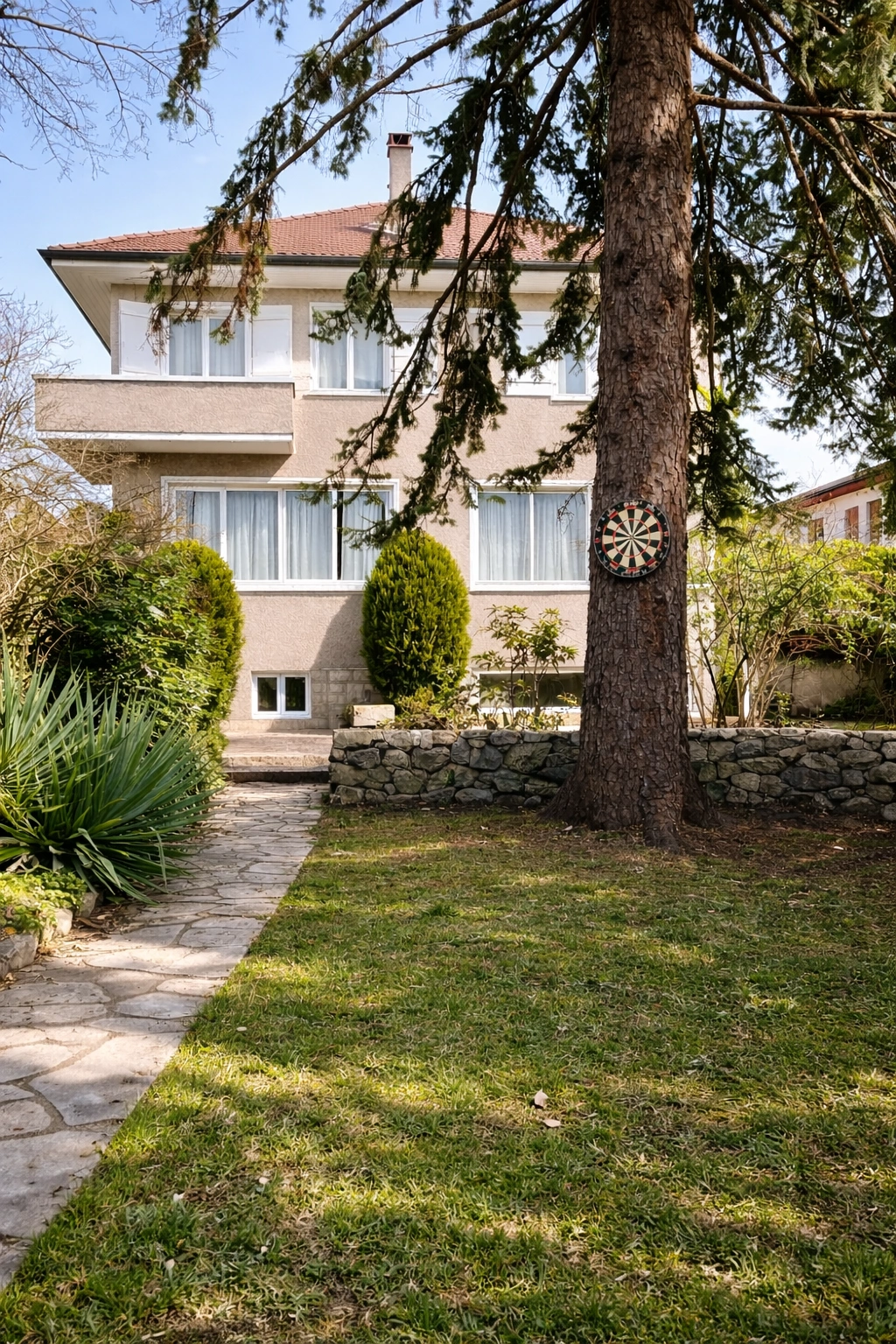
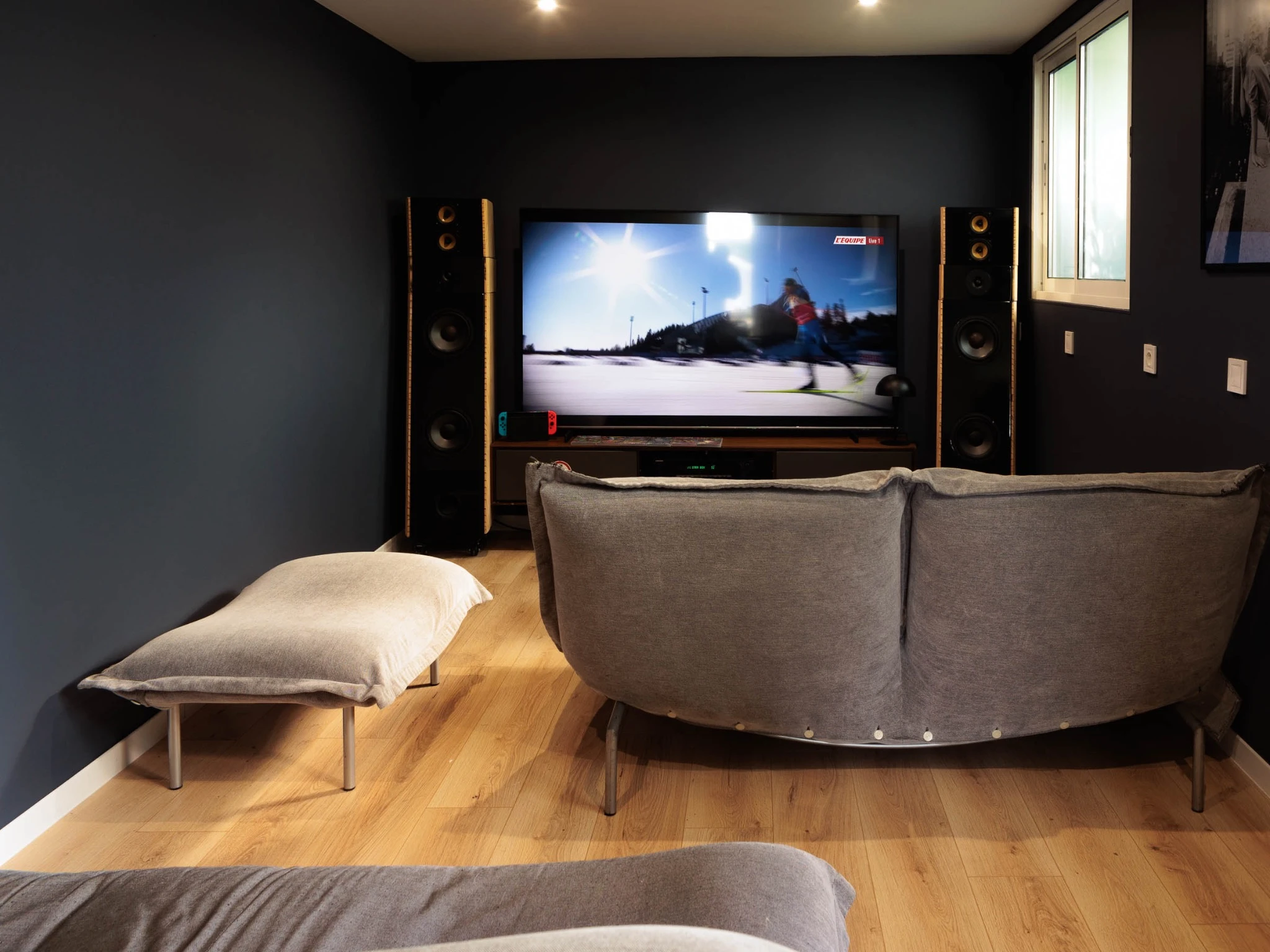
An unexpected advantage of coliving for remote workers: you're not alone. When 3-4 residents work from home on the same day, it creates an informal coworking atmosphere. Coffee breaks are shared, lunch is collective, and the isolation of the studio remote worker doesn't exist.
This is a wellbeing factor that remote work studies confirm: the main problem with remote isn't productivity, it's social isolation. Coliving solves this problem structurally.
Coworking spaces on the French side
For remote work days when you need an ultra-professional environment (client visit, important presentation, need for absolute quiet), coworking spaces exist in the border area.
In Annemasse, the central Espace Coworking offers day passes (15-25 €) or subscriptions (150-250 €/month). In Archamps, the Technopole offers shared offices in a more corporate setting. In Saint-Julien-en-Genevois, several spaces have opened since 2022.
These spaces are an option for intensive remote work, but for 1 to 2 days per week, your coliving room desk is more than sufficient and costs nothing extra.
The impact on your transport budget
Remote work reduces your transport budget in proportion to the days spent at home: 1 day per week is −20%; 2 days is −40%. With the Léman Express, it doesn't change the price (the pass is unlimited). By car, count on 80-140 CHF/month saved per weekly remote-work day (fuel + parking over ~4 days per month).
But the real gain is elsewhere: remote work allows you to live further from Geneva without the commute being penalizing. Municipalities like Cranves-Sales, Vétraz-Monthoux, or Bonne, 10-15 minutes further than Annemasse, are 10-15% cheaper. With 1 to 2 days of remote work, the additional commute cost is marginal.
The employer legal framework: what your HR needs to know
If your employer hasn't yet formalized its cross-border remote work policy, here are the key points to discuss with HR.
The remote work agreement should specify the maximum percentage, staying within the legal limits: ≤ 40% for tax, < 50% for social security. Remember the A1 certificate, which the employer requests via the ALPS platform to secure your Swiss social affiliation. Does Swiss professional accident insurance (LAA) cover remote work from France? In most cases, yes, if formalized. Are work tools (laptop, screen, ergonomic chair) provided for home? Some Swiss companies reimburse a flat rate of 50-100 CHF/month for remote work.
Most large Swiss companies now have a clear framework. SMEs are often behind. For up-to-date tax rules, the Geneva cantonal administration (ge.ch) is the reference; for the general remote-work framework, the SECO (State Secretariat for Economic Affairs) report is a good resource to share.
Our recommendation
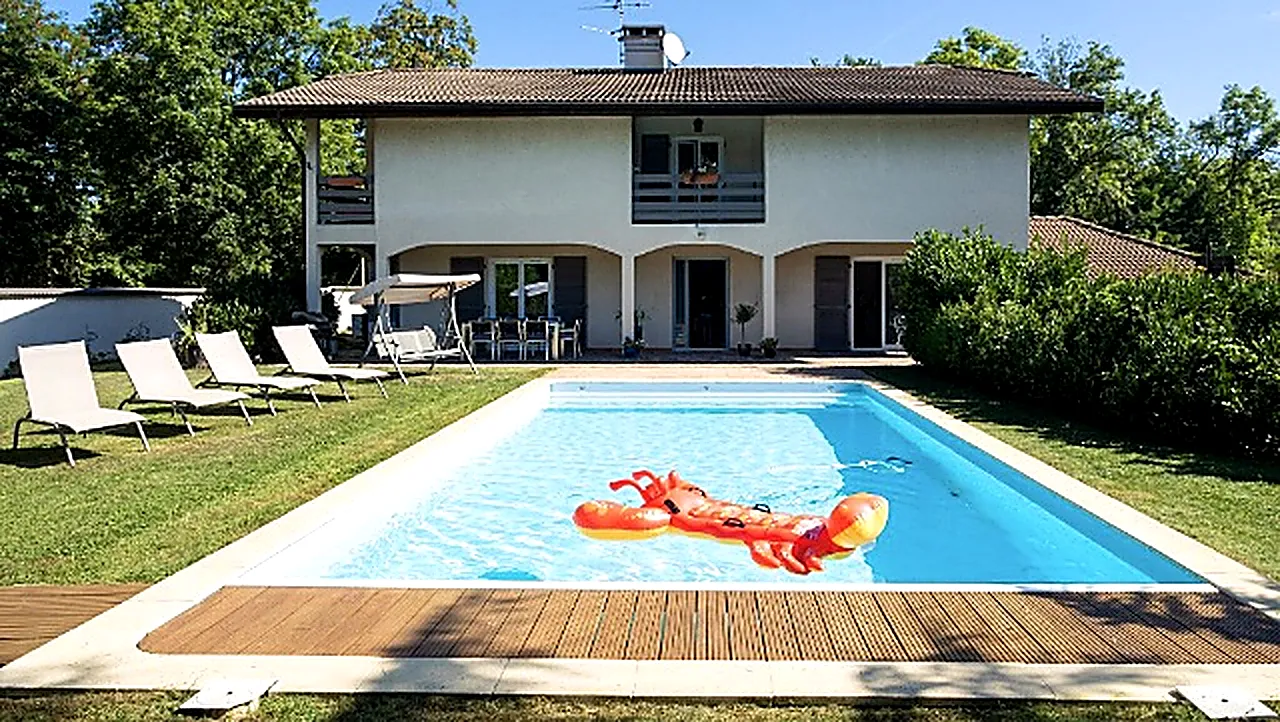
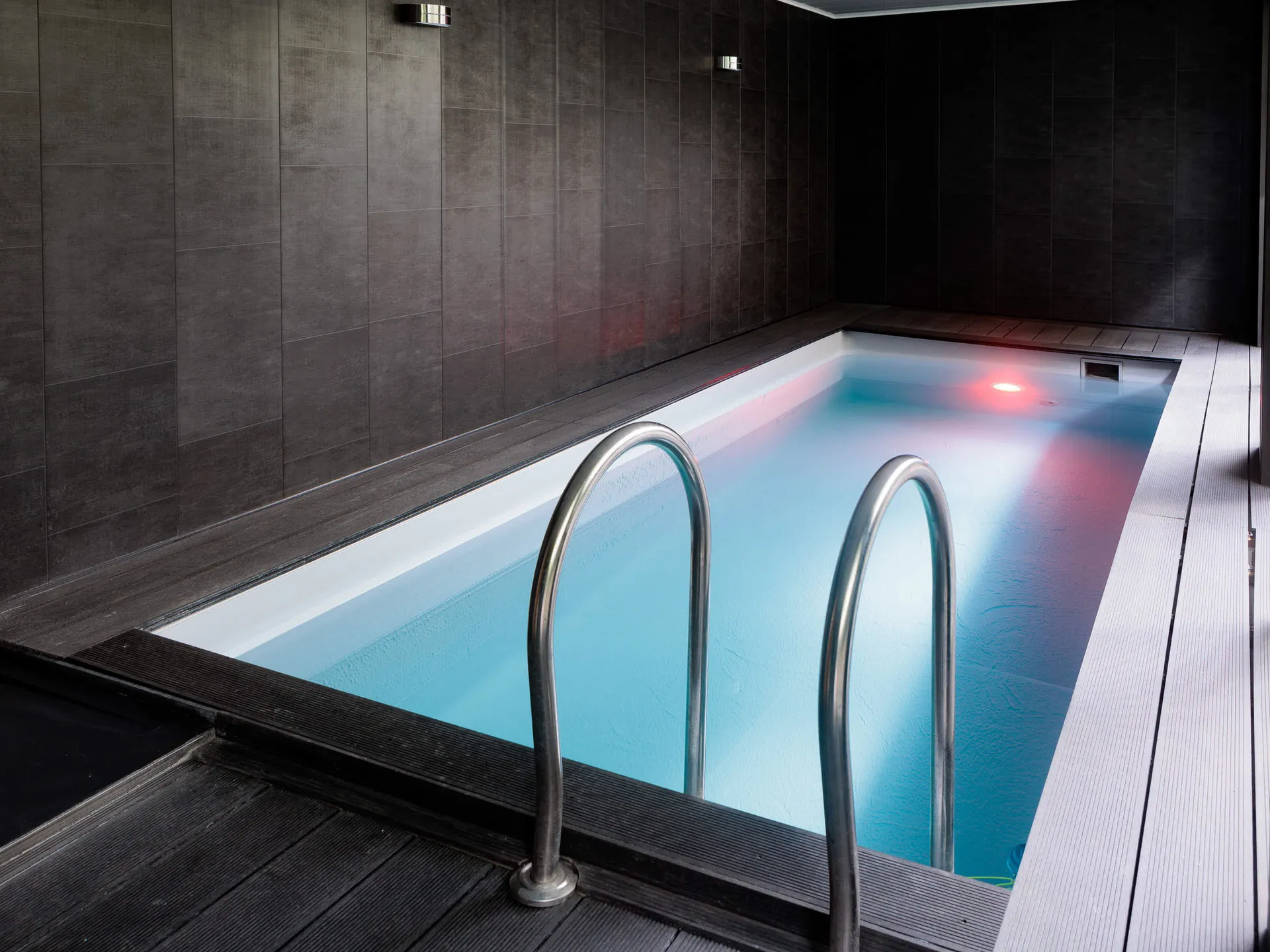
Up to 2 days of remote work per week (40%) is now the sweet spot for cross-border workers: it's legal, practical, and improves quality of life without complications. In coliving, those days are particularly pleasant: you work from your room or common areas, have lunch with other residents present, and enjoy the pool or sauna after work.
Don't exceed 40% (tax) without validating the impact, and stay under 49.9% (social) to keep your Swiss coverage. Beyond that, get specialized legal advice. And above all, formalize the agreement with your employer in writing.
Want to try remote work in coliving? Check our houses or apply.
Also read:
- Parking, bike, Léman Express: the real transport cost
- Building a network in Geneva when you arrive alone
- 5 mistakes to avoid when looking for cross-border housing
👉 Looking for shared housing near Geneva? At La Villa Coliving (Ville-la-Grand, Ambilly and Annemasse), a fully furnished all-inclusive room costs from CHF 1,370/month — utilities, fiber and cleaning included, no application fee — 15-20 minutes from Geneva by Léman Express or tram.