Geneva Cross-Border Tax: What Changes for Your Net Pay 2026

What nobody explains simply
Geneva cross-border worker taxation is a topic everyone dreads. Withholding tax in Switzerland, declaration in France, adjustment, tax credit, quasi-resident... The terms are bewildering, the forms incomprehensible, and the advice contradictory.
Yet understanding your taxation is essential for a simple calculation: how much you actually keep at the end of the month. And that amount determines your housing capacity, savings, and quality of life.
We're not giving a tax law lecture. We're doing the opposite: starting from your gross salary and arriving at your real net, step by step, with concrete numbers.
The 3-step mechanism
As a cross-border worker in the canton of Geneva, your taxation works in three stages.
Step 1: Withholding tax in Geneva
Your employer directly withholds a percentage of your gross salary. This rate varies by your scale (single without children = scale A, married single income = scale B, etc.), your income, and potential deductions.
For a single person without children (scale A0), the effective rate is between 12 and 17% depending on salary. A monthly gross of 7,000 CHF will result in about 850-950 CHF withholding tax. A gross of 10,000 CHF, about 1,400-1,600 CHF.
Step 2: Declaration in France
Even though you already pay taxes in Switzerland, you must declare your income in France (where you reside). Your Swiss income is converted to euros and integrated into your declaration. France calculates a theoretical tax on all your income.
Step 3: Tax credit to avoid double taxation
To prevent you from paying twice, the Franco-Swiss tax treaty provides a tax credit. Concretely, France "reimburses" you for the tax it would have collected on your Swiss income. You only pay French tax on any French income (rental income, investments, etc.).
In practice — and we see it every year on our residents' files — if you only have Swiss income and no French income, your French tax is generally zero or very low. The tax credit absorbs everything.
Your real net salary: 3 concrete simulations
Simulation 1: Junior profile — 65,000 CHF gross/year
Monthly gross: 5,417 CHF. Swiss social contributions (AVS, AI, AC, LPP): about 12-15% = 650-810 CHF. Geneva withholding tax (scale A0): about 8-10% of gross = 430-540 CHF. Monthly net salary: approximately 4,070-4,340 CHF.
This net is what lands in your account. With coliving rent at 1,370 CHF, you have about 2,700-2,960 CHF left for transport, food, leisure, and savings. It's tight but workable — especially since coliving includes everything (no hidden charges).
Simulation 2: Manager profile — 90,000 CHF gross/year
Monthly gross: 7,500 CHF. Social contributions: about 900-1,125 CHF. Withholding tax (scale A0): about 12-14% = 900-1,050 CHF. Monthly net salary: approximately 5,325-5,700 CHF.
Coliving at 1,370 CHF represents 24-26% of net. That leaves 3,950-4,320 CHF — a very comfortable budget for living on the French side. This is the typical profile of our residents: enough income to choose any housing, but coliving is chosen for quality of life, networking, and simplicity.
Simulation 3: Senior manager profile — 130,000 CHF gross/year
Monthly gross: 10,833 CHF. Social contributions: about 1,300-1,625 CHF. Withholding tax (scale A0): about 16-18% = 1,733-1,950 CHF. Monthly net salary: approximately 7,258-7,800 CHF.
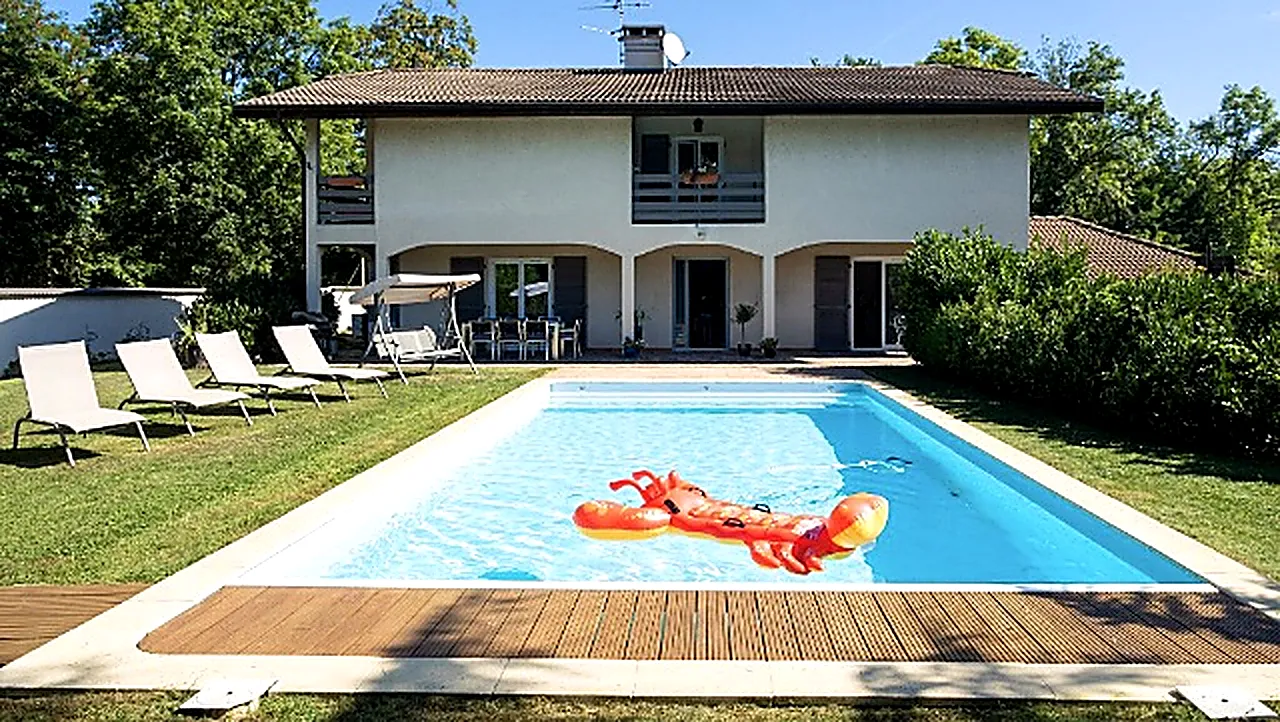
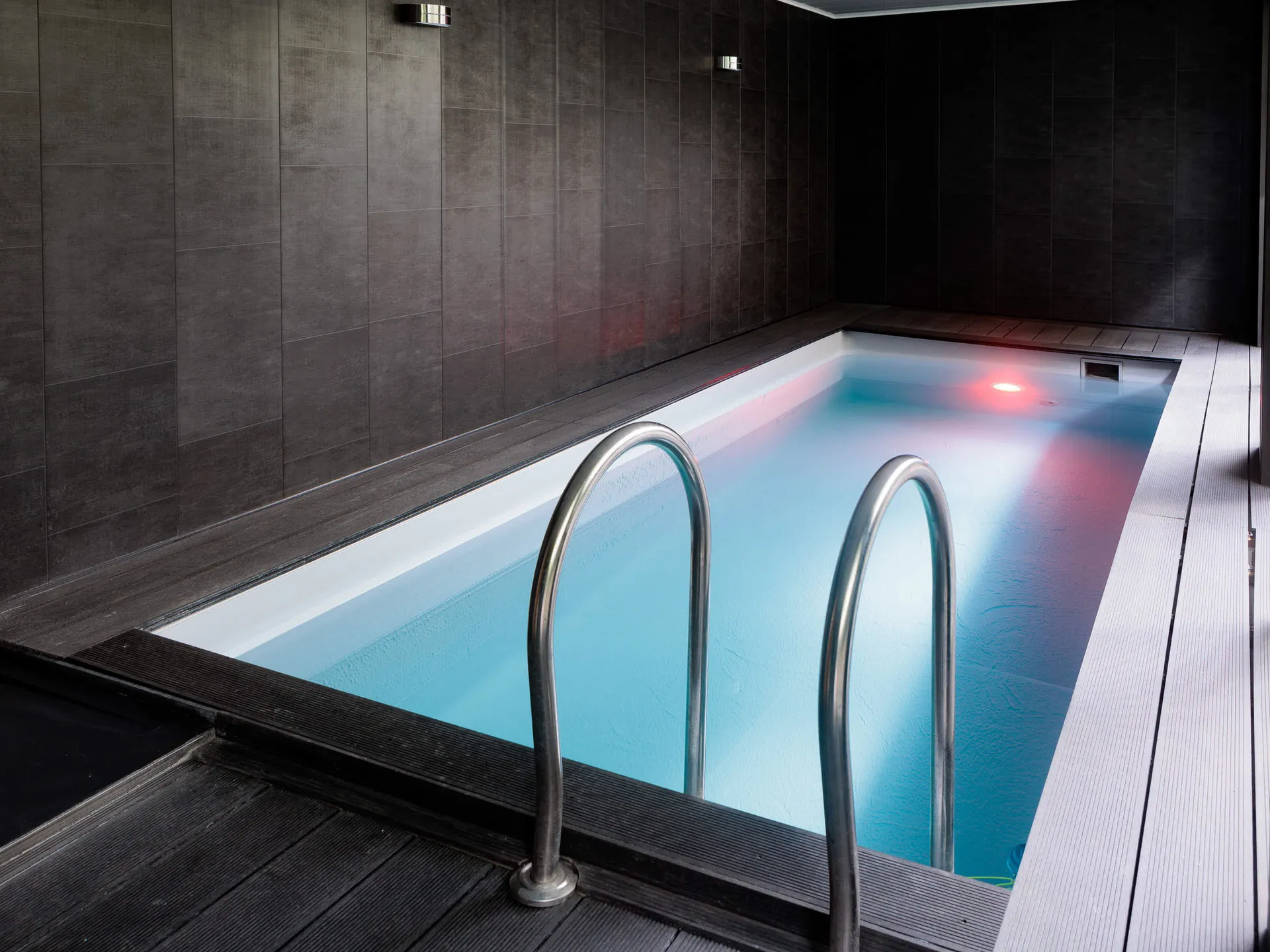
Coliving at 1,370 CHF represents only 18-19% of net. At this level, housing is no longer a budget constraint. The coliving choice is purely qualitative: pool, sauna, community, zero management.
Quasi-resident status: an optimization lever
Since 2021, Geneva cross-border workers can apply for "quasi-resident" status if 90% or more of their worldwide income comes from Switzerland. This status allows more deductions from withholding tax (3rd pillar contributions, transport costs, childcare, LPP buybacks...).
Concretely, quasi-resident status can reduce your withholding tax by 2 to 5 percentage points. On a salary of 90,000 CHF, that's 150-375 CHF per month in potential savings. It's not automatic: you must apply via the DRIS/TOU form to the Geneva tax administration — a step many of our residents only discover when they move in — and it's often worth getting help from a fiduciary.
The 3rd pillar: retirement savings and tax optimization
The 3rd pillar (pillar 3a) is a Swiss retirement savings account offering a tax advantage: contributions are deductible from taxable income. In 2026, the cap for employees with LPP is 7,258 CHF per year. For quasi-resident cross-border workers, this deduction directly reduces withholding tax.
The concrete tax saving: a 7,258 CHF contribution to the 3rd pillar reduces your taxable income by the same amount. If your marginal tax rate is 15%, that's about 1,089 CHF in tax savings, or 91 CHF per month. In addition to building retirement savings.
Mind the eligibility condition. The deduction is NOT automatic: it is reserved for quasi-residents — cross-border workers who request subsequent ordinary taxation (TOU) and meet the 90 % condition on income taxed in Switzerland. Without that status, if you remain taxed at source only, your 3a contribution does not reduce your Swiss tax; it keeps only its retirement-savings value. Check this first, before opening anything.
Opening a 3a while living in France. Every cross-border worker employed in Switzerland is affiliated to the AVS, and therefore eligible for pillar 3a. In practice many banks turn down non-residents for compliance reasons: access usually goes through insurers or providers specialised in cross-border pensions. Eligibility varies from one provider to the next — check case by case.
New in 2026: retroactive buy-back. Since 2026 you can top up the years when you did not contribute — or did not contribute in full — to your 3a. The official annual cap remains the reference for computing those catch-ups.
The most common tax mistakes
Not declaring in France. Even if your French tax is zero thanks to the tax credit, you MUST declare your Swiss income. Non-declaration is tax fraud, even if you owe nothing.
Forgetting form 2047. This form specific to foreign-source income is essential. Without it, the tax credit isn't applied and you risk double taxation.
Not anticipating CSG-CRDS. If you have asset income in France (rental income, capital gains), it remains taxable there even if you work in Switzerland. But the rate depends on your health coverage: a cross-border worker covered by Swiss LAMal is exempt from CSG and CRDS and pays only the 7.5% solidarity levy (not the full 17.2%, which applies only to workers covered by French social security / CMU). This is a crucial point for cross-border real estate investors.
Confusing gross and net in budget calculations. Swiss gross salary and net are very different (25-35% gap). When calculating your housing budget, ALWAYS start from net after withholding tax.
The impact on your housing choice
In summary, here's what to remember for your housing budget.
Your real disposable income is your gross salary MINUS social contributions MINUS withholding tax. This amount should serve as the base for the 30% rule. The all-inclusive coliving rent of 1,370 CHF is particularly easy to integrate into a budget because there are no variables: no seasonal charges that spike in winter, no unexpected repairs, no fluctuating bills.
For a cross-border worker earning 80,000-100,000 CHF gross/year (the core of the Geneva market), net after tax is between 5,300 and 7,000 CHF/month. Coliving represents 20-26% of this net — perfectly within the financial comfort zone.
Check our pricing or submit your application — you can move in within 72 h of your first contact if a room is available.
Also read:
- Cross-border health insurance: LAMal or CMU?
- What rent as a cross-border worker in Geneva?
- Shared housing budget near Geneva: the complete guide
👉 Looking for see our rooms on the French side? At La Villa Coliving (Ville-la-Grand, Ambilly and Annemasse), a fully furnished all-inclusive room costs from CHF 1,370/month — utilities, fiber and cleaning included, no application fee — 15-20 minutes from Geneva by Léman Express or tram.