Coliving: Who It's For (And Who It's Not For)
Coliving: Who It's For (And Who It's Not For)
Coliving is booming. Across Europe, coliving beds have exploded in the last five years, driven by property prices, remote work and a generation that values experience over ownership. But behind the attractive marketing — community, flexibility, all-inclusive — there's a reality: coliving isn't for everyone.
This guide is deliberately honest. At La Villa Coliving, we'd rather tell you the truth before you move in than manage a lease break two months later. Here are the profiles for whom it works beautifully, and those for whom it's a poor choice.
The 5 Profiles for Whom Coliving Is Ideal
1. The new cross-border worker (25-35, first job in Switzerland)
This is our most common profile. You've just landed a position in Geneva, you don't know anyone in the region, and you need housing quickly. Coliving solves three problems at once: housing (furnished, all-inclusive, no guarantor needed), social network (built-in community from day one), and logistics (utilities, internet, cleaning — all managed).
The specific advantage: you don't need to furnish an apartment for a first cross-border experience whose duration you don't know. If it doesn't suit you after 12 months, you leave with nothing to resell or store.
Average stay length for this profile: 14-18 months.
2. The expat in transition (30-45, international transfer)
You're arriving from another country for a position in Geneva or an international organisation. You don't know the local rental market, you may not speak French, and your company gives you 3-6 months to find permanent housing.
Coliving is the perfect airlock: move in within days, international environment (our residents come from 15+ nationalities), and time to understand the local market before committing to a long lease.
Average stay: 6-12 months (then transition to individual housing once settled).
3. The young professional who values experience (25-32)
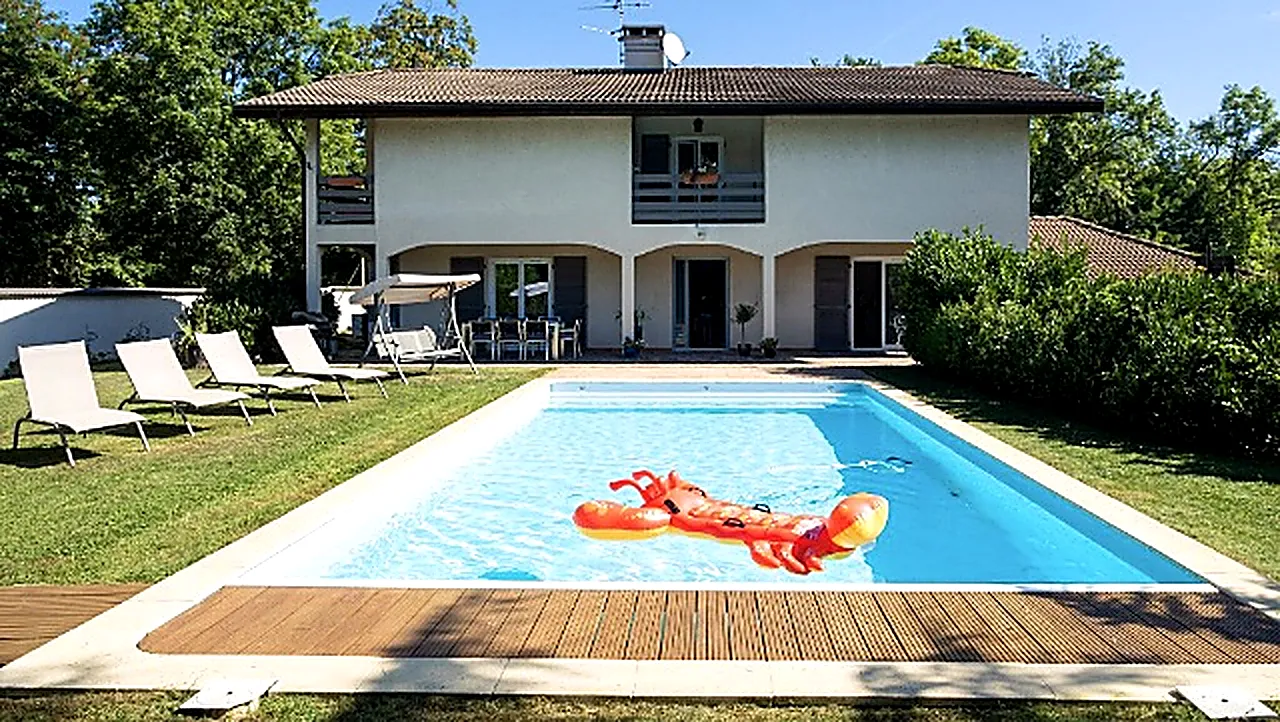
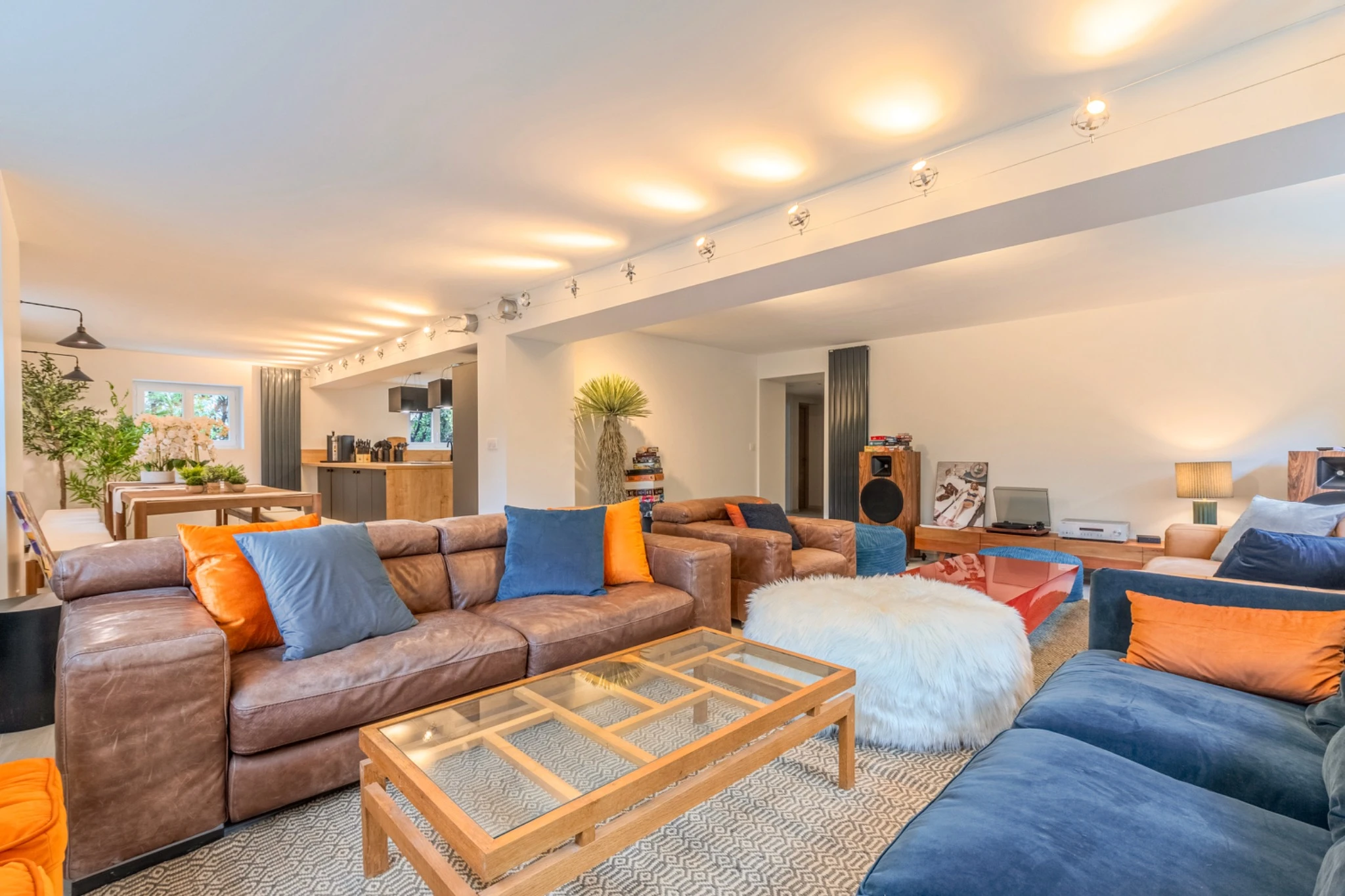
You have no family constraints, you earn well, and you prefer investing in experiences rather than IKEA furniture. Premium coliving offers a living standard superior to what you could afford alone (pool, gym, designer common spaces) at a cost comparable to a standard studio.
This profile often stays longer than planned, precisely because the living standard is hard to replicate in individual rental.
Average stay: 18-24 months.
4. The professional in transition (30-40, between two lives)
Divorce, career change, return from expatriation — you're in a transition phase and need a stable place without the constraints of a full move-in. Coliving offers a reassuring, social environment at a time when isolation can weigh heavily.
This profile often underestimates the positive impact of community: when your life is being rebuilt, having people around you daily makes an enormous difference.
Average stay: 12-18 months.
5. The settled digital nomad (28-40, 100% remote work)
You work remotely and can live anywhere. Coliving offers a social framework that nomadism alone doesn't provide, reliable internet (crucial for remote work), and a flexible lease.
At La Villa, this profile is less frequent (we're on 12-month leases, not short stays), but some digital nomads choose to settle in the Geneva region for a year — the quality of life is exceptional and the central European location is ideal.
The 5 Profiles for Whom Coliving is NOT Right
1. Established couples
If you're a couple looking for your own place, coliving probably isn't the right option. Spaces are designed for individuals (private rooms with en-suite bathrooms, but shared common areas). A couple needs their own space — private kitchen, private living room, daily intimacy.
Exception: some couples discovering a new city do coliving for a few months. But it's rare and requires good tolerance for shared living.
2. People who need absolute silence
Coliving is alive. There are sounds of communal living: conversations in the kitchen, music in the living room, comings and goings. If you're hypersensitive to noise or need total silence to recharge, an individual studio will suit you better.
At La Villa, each room is a private space with good insulation, but common areas are... common. That's the deal.
3. Highly introverted people who dislike daily interactions
This isn't about being extroverted 24/7. Most of our residents are normal people who appreciate their peace. But if the idea of bumping into someone in the kitchen in the morning stresses you, or if you really dislike spontaneous conversations, coliving will generate daily friction that drains your energy.
Being introverted isn't a problem — many of our residents are. But being introverted AND not liking social proximity is a profile that struggles in coliving.
4. Families with children
Coliving is designed for active adults without children. Common spaces aren't adapted for young children, communal living schedules aren't compatible with family rhythms, and other residents didn't sign up to live with children.
5. People who want to personalise their home
If decorating your interior to your taste matters — hanging your paintings, choosing your furniture, painting walls — coliving won't suit you. Rooms are tastefully furnished but in a cohesive design for the whole house. You can add personal touches, but the space remains semi-collective.
Questions to Ask Yourself Before Signing
How long do you plan to stay? If less than 6 months, coliving with a 12-month lease isn't ideal (unless you know you'll stay in the region). If 1-2 years, it's the sweet spot.
What's your relationship with solitude? If you flee solitude, coliving is perfect. If you seek solitude, it's not for you.
What's your budget? At La Villa premium coliving, rent is 1,380 CHF all-inclusive. That's comparable to a furnished studio in Annemasse (€800-900 unfurnished + utilities + internet + insurance + furniture amortisation). But if your budget is tight, a traditional flatshare will be cheaper.
Are you tolerant of noise and communal life? Be honest with yourself. It's not a flaw not to be — it's just an indication that coliving isn't your format.
Do you have incompatible lifestyle habits? If you wake at 5am making noise, or regularly come home at 3am with friends, communal living will create tensions.
What Coliving Is NOT
Coliving is not a student flatshare. Residents are working professionals with income, not students struggling at month's end. Spaces are premium, professionally maintained, and house rules are clear and respected.
Coliving is not a hotel. You don't just come to sleep — you participate in a community. If you want hotel service without social interaction, get a serviced apartment.
Coliving is not a compromise for lack of better options. It's a deliberate lifestyle choice — trading some private space for a superior living environment, community and zero logistical mental load.
The Ultimate Test
If you identify with 3 of these 5 statements, coliving is probably for you:
"I prefer a premium shared living environment to an average studio alone." "The idea of coming home to a place with life appeals to me." "I want someone else to handle cleaning, internet, utilities." "I'm in a life phase where flexibility outweighs roots." "I want to meet people without the effort of going to find them."
If you identify with 3 of these 5 statements, coliving is probably NOT for you:
"I need absolute silence to recharge." "I want to decorate my home exactly to my taste." "The idea of bumping into people daily in my kitchen exhausts me." "I'm in a couple and looking for our own place." "I prefer to be alone in the evenings and weekends."
Conclusion
Coliving is a brilliant format for the right profiles and a source of frustration for the wrong ones. The difference between the two comes down to one question: do you see shared living as an advantage or as a compromise?
If it's an advantage, welcome — you'll love it.
Also read:
- Building a network when arriving alone
- Geneva studio vs flatshare in France: the real budget
- Savings in all-inclusive coliving near Geneva
Think coliving is right for you? Visit our houses and apply here.