What is Coliving and Why It Matters in 2025

You've probably heard about coliving. It's the buzzword in young professional conversations, and for good reason: it's a concrete answer to a housing crisis lasting 15 years. But what exactly is it? And why does it matter in 2025?
Simple definition: what coliving is NOT
Before defining coliving, let's eliminate confusion.
Coliving is not traditional roommate sharing. In a classic roommate situation, you share a small apartment with 2-3 people and everything is jointly managed (bills, meals, cleaning). It's noisy, people come and go constantly, utility bills are disputed. Coliving is opposite: you have a completely private, furnished room, and only common spaces (kitchen, living room, gardens) are shared.
Coliving is not a hotel. You don't pay nightly. You sign a 12-month contract. You're a resident, not a passing guest. Hostelling is sleeping in dorms.
Coliving is not traditional short-term private rentals. An Airbnb rental is short-term, no services, no organized community. Coliving is structured, with an operator, clear rules, proper management.
So what is it?
Definition: what is coliving?
Coliving is a housing model where you rent a furnished, private room in a shared house or building with common spaces. Rent includes all utilities, internet, often common space cleaning, and sometimes more (pool, events, gym, etc.). A professional operator manages the building, contracts, community, maintenance.
Rules are clear, included services are documented, and there's an intentional community (not just people randomly falling into the same apartment). It's between hotel and traditional roommate situation.
Where does coliving come from? Recent history
Coliving didn't appear from nowhere. It's a reaction to three forces:
1. Housing crisis (2000s-2010s)
From 2008 onward, the financial crisis battered Western economies. Salaries stagnated, property prices exploded. A young professional in New York, Berlin, or London realized they could spend 40-50% of income on rent. Unsustainable.
Simultaneously, urban migration exploded. People migrate to metropolitan areas. But cities don't build enough housing. Supply vs. demand: demand wins. Prices rise.
2. Digitization and mobility (2010s-2015)
Work transforms. You're not glued to the same office for 40 years. You move between companies, cities, countries. So you want flexible housing, not a 10-year property investment. Long contracts feel restricting.
Concurrently, digital services explode. Uber, Airbnb, every SaaS: everything becomes on-demand. Housing? Why not?
3. Rediscovery of community (2015-2020)
Millennials and Gen Z feel isolated. Freelance work, living alone, dispersed urbanization: everything creates loneliness. Coliving arrives with a promise: housing AND community. You're surrounded by people your age, in similar lives.
Result: coliving emerges first in Berlin (25hours, Spaces), then Amsterdam, London, New York. Startups raise capital and accelerate. By 2019-2020, coliving exists in 50+ European cities.
Who lives in coliving in 2025?
The stereotype: a bearded digital nomad with a laptop. Wrong. Here's the real profile:
Digital nomads and remote workers (~20%)
Yes, they exist. People working for US companies from Europe. Very mobile, short contracts. But minority.
Young professionals relocating (~35%)
Main profile: someone gets a new job in Geneva, Berlin, Paris. She arrives from another city. She doesn't want a 12-month commitment to an apartment when she knows nothing. She moves into coliving for 12 months, enough time to truly integrate. Once decided to stay, she might continue in coliving or transition to traditional housing if preferred.
Expats (~25%)
A Japanese person arrives in Geneva to work for Nestlé. A Brazilian for a private bank. They have no French guarantor, know nobody. Coliving? Simple, transparent, no bureaucracy. Clear contract. Perfect for landing.
People in transition (~15%)
Divorce, lease ending, life change. You need housing in 2 weeks, flexible, no heavy commitment. Coliving.
Young professional couples (~5%)
Two people, two salaries, flexibility. They test a city, take a double room in coliving, then pivot. Less common than expected.
Real benefits of coliving
Beyond marketing promises, coliving solves concrete problems.
1. No administrative hassle
Traditional rental: French guarantor, 3 pay stubs, receipts, 12-month contract, 1-2 month deposit, 20 viewings. Coliving: sign, arrive. Simple file, no pharaonic documentation.
Huge advantage for expats, people moving, those without clear French guarantors.
2. Furnished and equipped
You arrive, everything's there. Bed, fridge, kitchen, WiFi, washing machine. Zero effort. No furniture moving.
For someone arriving from abroad? That's 2-3 weeks of life saved.
3. Stable 12-month lease
A clear 12-month commitment gives you stability and allows you to genuinely integrate into your new community.
4. Included: utilities, internet, cleaning
You pay ONE price. No electricity surprise in January (+50 EUR), no internet negotiation, no arguments over bills.
Predictability = peace of mind.
5. Organized community
Unlike traditional roommate situations where people cohabit by default, coliving offers intentional community. Gatherings, activities, active group chats. You arrive isolated, leave with 20 new friends.
Huge for integration and quality of life.
6. Reactive maintenance and support
Door won't close? Report it, operator fixes within 24h. No need to badger landlords. Professional.
Coliving vs alternatives: comparison table
| Coliving | Rental | Roommate | |
|---|---|---|---|
| Contract | 12 months | 3-12 months | 12 months |
| Cleaning | Included | You handle it | You handle it |
| WiFi | Included | You pay | Maybe |
| Furniture | All included | Sometimes | Often poor |
| Utilities | All included | You pay | Monthly debates |
| Admin | Minimal | Heavy | Chaotic |
| Community | Organized | None | Random |
| Price | CHF 1,380 | €1,000-1,500 | €600-1,000 |
| Best for | Expats, pros | Long-term locals | Students |
The La Villa Coliving experience
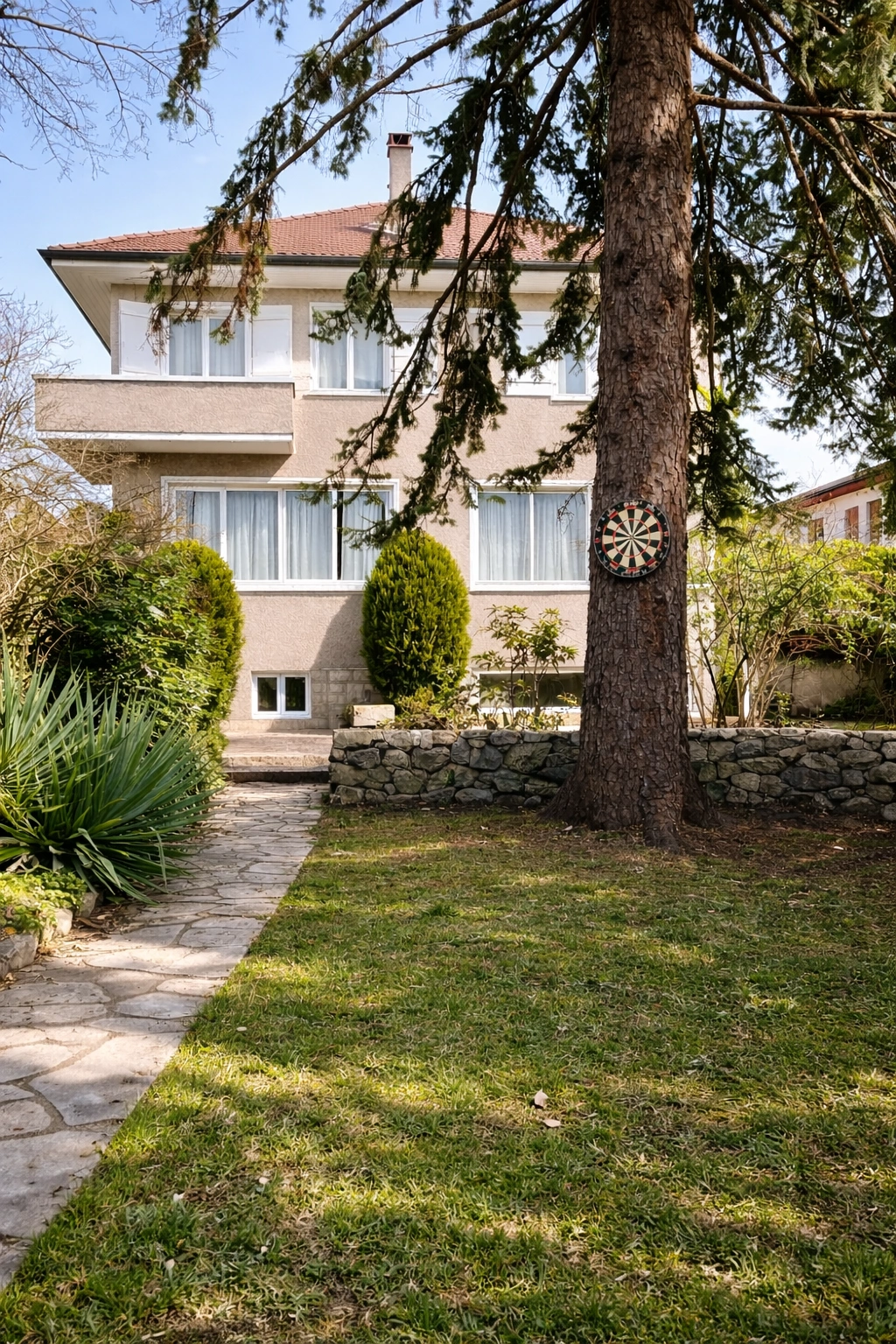
At La Villa, we operate three premium houses in the Annemasse-Geneva region. Here's what defines them.
Completely private, furnished rooms
Each resident has a private room with queen or single bed, desk, closets, private bathroom (except a few budget rooms). You can close the door and have complete privacy.
No chatty roommates. No cleaning negotiation with housemates. It's your space.
Professional common spaces
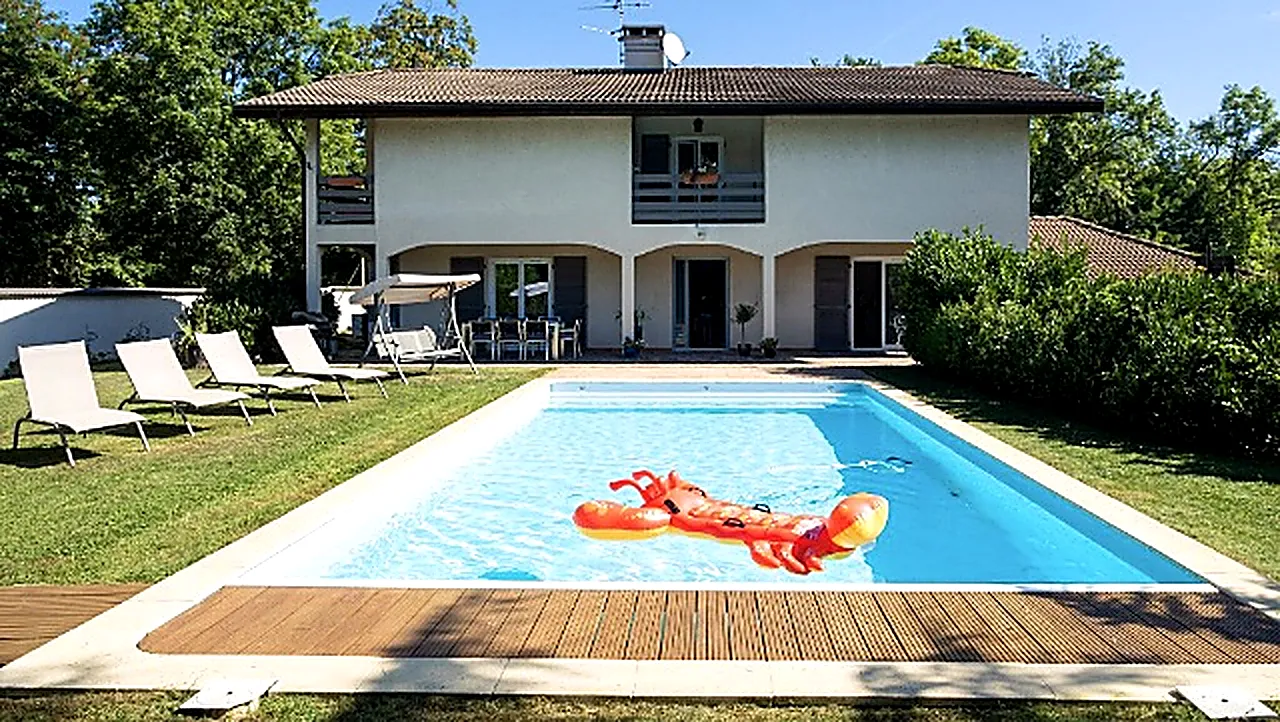
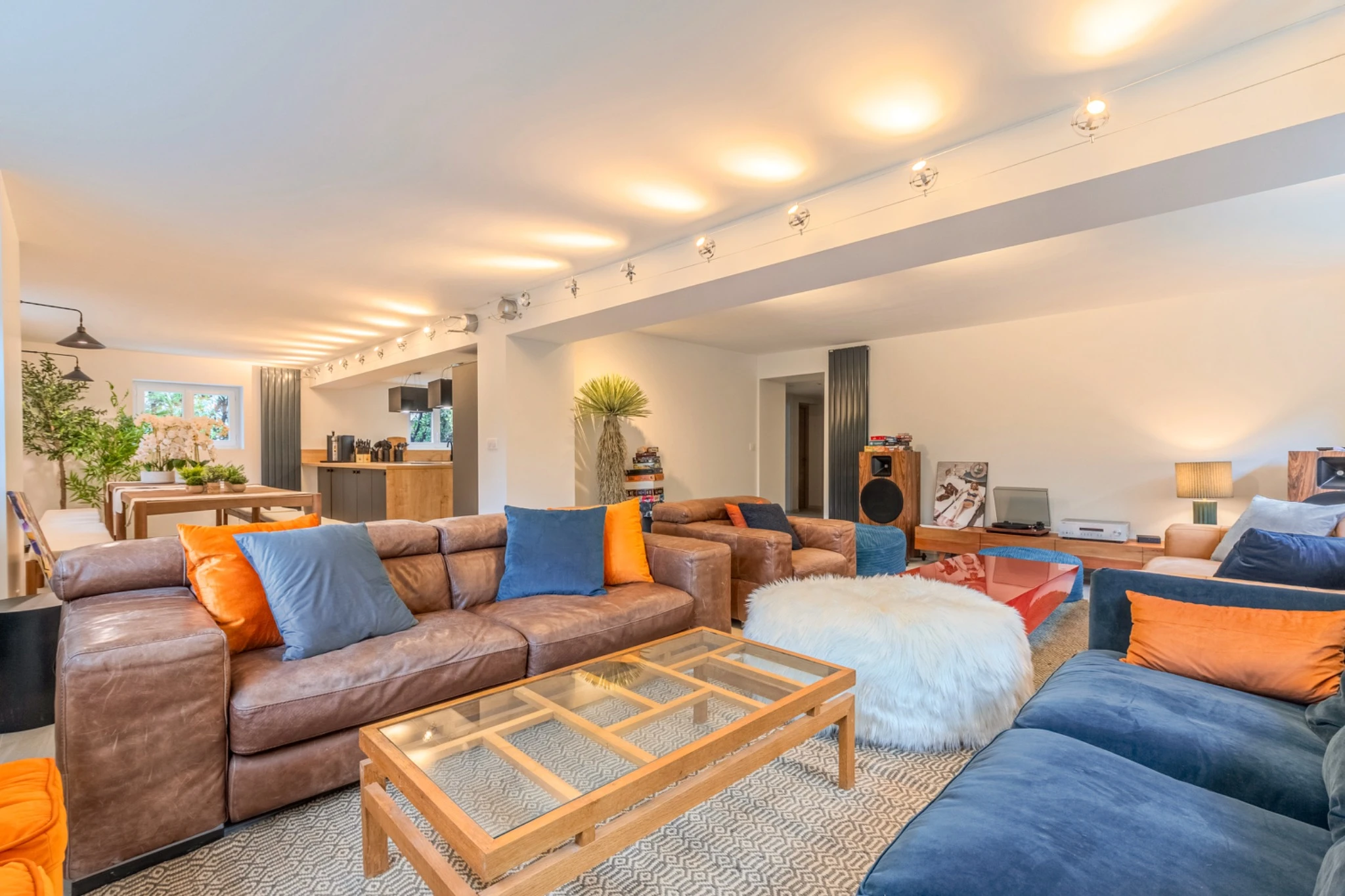
Fully equipped kitchen for cooking. Living room with TV, games, Netflix. Dining area. High-speed WiFi everywhere. On our two largest houses: pool, garden with lounge chairs, pétanque court.
Somewhere you want to spend time, not just sleep.
Services include everything
Rent: room + utilities (water, electricity, heating) + internet + common space cleaning + cleaning supplies. One bill. Zero surprises.
Strategic location
Le Loft (Ambilly) and Le Lodge (Annemasse) are 5-10 minutes walk to Léman Express station, or 15 minutes by bike. Free bike storage at station. For cross-border workers, it's ideal infrastructure.
Ville-la-Grand is slightly farther but centered for TPG bus access to Geneva and more peace.
Diverse, intentional community
At La Villa, you live with other cross-border workers, expats, young pros. No randomness: people in your situation. Regular events (aperitifs, barbecues, group activities). Isolation isn't here.
12-month lease
A 12-month commitment that provides stability and belonging, enough time to truly integrate into your new community and build lasting connections.
Why coliving explodes near Geneva
The Annemasse-Geneva region is coliving's textbook case.
Cross-border mobility
100,000 people arrive and leave yearly. They're unsure about staying. They need flexibility.
Housing crisis
French rents rise fast (+8% yearly). Landlords want long contracts and complicated guarantees. Young professionals can't manage it.
International population
Geneva attracts expats globally: Japanese, Brazilians, Indians, Australians. They want simple. Coliving is simple.
Unavoidable costs
Studio in Geneva = 2,500+ CHF. Coliving in Ambilly = CHF 1,380. Gap is huge. Rational people choose coliving.
Timing: post-COVID
During COVID, people realized they didn't want to live alone. Remote work isolated. Community became valuable. Coliving solved it in 2021-2023.
The future of coliving
Where is coliving heading 2025-2030?
1. Standardization and major brands
Today: many small operators. Startups with 2-5 houses. In 5 years, franchises and chains will dominate. Like Ibis or Airbnb, but for long-term.
2. Integrated technology
Today: WiFi, electricity. Tomorrow: smart homes, app-based access, preventive maintenance via IoT, real-occupancy-based utility calculation, common space booking from apps.
La Villa testing this in 2026. Kitchen screen, Slack for issues, energy consumption dashboards.
3. Social impact
Coliving becomes more than an industry; it's answering urban loneliness. Operators succeeding build real community, not just rental housing.
4. Sustainability
Coliving homes consume 30% less per person than solo apartments (space sharing, shared appliances). Already an ecological argument. In 5 years, central.
5. Urban integration
Today: coliving = slightly peripheral neighborhoods. Tomorrow: city centers. Building by building, coliving will conquer hyper-centers as real estate developers realize it's more profitable.
Conclusion: coliving is the answer
Relocating to Geneva? Expat? Changing cities? Coliving is likely your best option. Not a buzz. It's a structural answer to a real problem.
Housing crisis won't disappear. Professional mobility will accelerate. Isolation remains a health concern. Coliving addresses all three. It'll grow because it must.
Try it, and you'll see it's not sacrifice. It's improvement. Private room, community, zero admin hassle. Sounds basic, but compared to traditional rental chaos? Revolutionary.
Welcome to the movement.